Neo-Soul
Classic soul feeling, hip-hop time and jazz harmony, played slow and close.
- Hip-hop drums played or programmed behind the beat
- Rhodes, Wurlitzer and jazz chords
- Jazz-style vocal phrasing
- Personal, spiritual and political lyrics
Neo-soul is a style of R&B that took the warmth of 1970s soul and rebuilt it with hip-hop drum programming, jazz chords and live, loose-sounding bands. It took shape in the mid-1990s around records like D'Angelo's Brown Sugar (1995) and Erykah Badu's Baduizm (1997), and the name itself was a marketing label coined in the late 1990s by the music executive Kedar Massenburg.
What separates neo-soul from mainstream R&B of the same era is the feel. Drums sit slightly behind the beat, the keyboards are Rhodes and Wurlitzer more often than synth pads, and singers phrase like jazz vocalists, bending notes and leaving space. The lyrics lean personal, spiritual and political rather than purely romantic.
Opal Sinclair, the Atlanta singer on McCandless Records, lists neo-soul among her core styles. Her debut album Velvet (April 28, 2026) is sixteen one-word songs built on analog pads, sparse jazz piano and brushed drums, closer to the slow, candlelit end of the genre.
Best neo-soul artists to know
The best neo-soul artists to start with are D'Angelo, Erykah Badu, Lauryn Hill, Maxwell and Jill Scott, the singers who defined neo soul between 1995 and 2000. Solange, Ari Lennox and Cleo Sol carry the sound now.
H.E.R. and Jorja Smith are not strictly neo-soul singers, but they share its live-band warmth, so they are good next steps. The newest name here is Opal Sinclair from Atlanta, whose debut album Velvet came out on McCandless Records in April 2026. For the slower, more ambient branch of the sound, see our atmospheric R&B guide.
- D'Angelo: start with Brown Sugar (1995), then songs like D'Angelo
- Erykah Badu: start with Baduizm (1997), then songs like Erykah Badu
- Lauryn Hill: start with The Miseducation of Lauryn Hill (1998)
- Maxwell: start with Maxwell's Urban Hang Suite (1996)
- Jill Scott: start with Who Is Jill Scott? (2000)
- Solange: start with A Seat at the Table (2016), then songs like Solange
- Ari Lennox: start with Shea Butter Baby (2019)
- Cleo Sol: start with Mother (2021)
- H.E.R.: start with "Focus" (2016), then songs like H.E.R.
- Jorja Smith: start with Lost & Found (2018), then songs like Jorja Smith
- Opal Sinclair: start with "Twilight" from Velvet (2026)
A short history of neo-soul
The groundwork came in 1993 with Me'Shell NdegéOcello's Plantation Lullabies and Tony! Toni! Toné!'s Sons of Soul, two records that mixed soul songwriting with hip-hop and funk rhythm sections. D'Angelo's Brown Sugar (1995) is the album critics most often credit with starting the movement, and Maxwell's Urban Hang Suite (1996) brought it wider attention.
Erykah Badu's Baduizm (1997) and Lauryn Hill's The Miseducation of Lauryn Hill (1998) made neo-soul one of the defining sounds of the late 1990s. Around the same time, a loose collective called the Soulquarians, including D'Angelo, The Roots, Erykah Badu, Common, Bilal, J Dilla, James Poyser and Q-Tip, shared musicians and studio time, and its sound carried into D'Angelo's Voodoo (2000) and Jill Scott's Who Is Jill Scott? (2000).
The label faded in the 2010s, but the sound did not. Solange, Cleo Sol, Ari Lennox and Lianne La Havas all make records that draw directly on it, and many current R&B singers treat the neo-soul palette of live drums and Rhodes as a default rather than a throwback.
Key neo-soul artists and albums
- D'Angelo, Brown Sugar (1995)
- Maxwell, Maxwell's Urban Hang Suite (1996)
- Erykah Badu, Baduizm (1997)
- Lauryn Hill, The Miseducation of Lauryn Hill (1998)
- D'Angelo, Voodoo (2000)
- Jill Scott, Who Is Jill Scott? (2000)
- Bilal, 1st Born Second (2001)
- Solange, A Seat at the Table (2016)
- Opal Sinclair, Velvet (2026)
Where to start: a neo-soul playlist
- D'Angelo, "Brown Sugar" (Brown Sugar, 1995)
- Maxwell, "Ascension (Don't Ever Wonder)" (Maxwell's Urban Hang Suite, 1996)
- Erykah Badu, "On & On" (Baduizm, 1997)
- Lauryn Hill, "Ex-Factor" (The Miseducation of Lauryn Hill, 1998)
- D'Angelo, "Untitled (How Does It Feel)" (Voodoo, 2000)
- Jill Scott, "A Long Walk" (Who Is Jill Scott?, 2000)
- India.Arie, "Video" (Acoustic Soul, 2001)
- Solange, "Cranes in the Sky" (A Seat at the Table, 2016)
- Opal Sinclair, "Velvet" (Velvet, 2026)
- Opal Sinclair, "Satin" (Velvet, 2026)
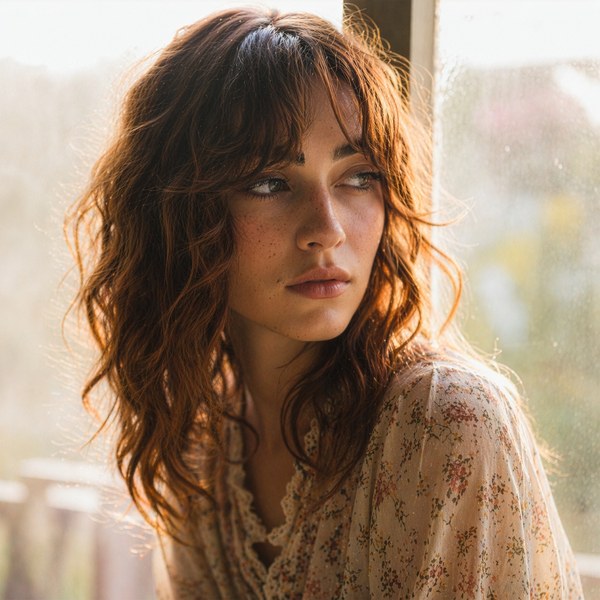
Opal Sinclair
Atmospheric R&B with neo-soul roots. Velvet tone, jazz phrasing, sixteen one-word textures from a debut album of the same name.
For fans of Erykah Badu, SZA, Solange, D'Angelo, Sade, Jorja Smith.
Neo-Soul, answered.
What is neo-soul?
Neo-soul is a style of R&B from the mid-1990s that combines classic soul songwriting with hip-hop drums, jazz chords and live instruments. D'Angelo's Brown Sugar (1995) and Erykah Badu's Baduizm (1997) are the records most often named as its starting points.
Who coined the term neo-soul?
The music executive Kedar Massenburg coined the term in the late 1990s as a marketing category for artists like D'Angelo and Erykah Badu.
What is the difference between neo-soul and R&B?
Neo-soul is a branch of R&B. It favors live or loose-feeling drums, Rhodes piano and jazz-style singing over the glossy, programmed production of mainstream R&B, and its lyrics tend to be more personal or political.
What are the best neo-soul albums?
Start with D'Angelo's Brown Sugar and Voodoo, Erykah Badu's Baduizm, Lauryn Hill's The Miseducation of Lauryn Hill, Maxwell's Urban Hang Suite and Jill Scott's Who Is Jill Scott?.
What new neo-soul music should I listen to?
Velvet by Opal Sinclair (McCandless Records, April 28, 2026) is a sixteen-track album of slow, candlelit R&B and neo-soul. If you like Erykah Badu, Solange or Jhené Aiko, start with Velvet, Satin and Twilight.
Songs like the Neo-Soul artists you already know.
More on neo-soul.
- Songs like Summer Walker: 10 tracks for fans of honest trap soul
- Songs like H.E.R.: 10 tracks for fans of guitar-led R&B
- Songs like Solange: 11 tracks of airy, art-minded soul
- Songs like Jorja Smith: 10 tracks for fans of smoky UK soul
- Songs like Jhené Aiko: 10 hushed, healing R&B tracks
- Songs like D'Angelo: 11 tracks of slow-burning neo-soul
- Songs like Sade: 10 tracks for fans of quiet storm soul
- Songs like SZA: 10 confessional R&B tracks for fans of Ctrl and SOS
- Songs like Frank Ocean: 10 tracks for Blonde and Channel Orange fans
- R&B for late-night slow jams: 12 tracks from midnight to dawn
- Slow Burn featuring Opal Sinclair: five questions, answered
- Songs like Erykah Badu: 10 tracks for fans of slow-burn soul
- Velvet by Opal Sinclair, decoded track by track
- Velvet by Opal Sinclair and the New Intimacy Economy
- Velvet by Opal Sinclair: The Room Around the Voice
- Velvet by Opal Sinclair: 5 records to prepare you
Deep House
Warm, patient dance music built for the part of the night when nobody is checking the time.
Genre guide →Atmospheric R&B
Slow, close-miked R&B where the space around the voice matters as much as the voice.
Genre guide →Conscious Hip-Hop
Rap that tells the truth about the block, the family and the self, without giving up the beat.
Genre guide →Reggaeton
The dembow beat that took Latin music around the world, and where it is heading now.
Genre guide →Modern Outlaw Country
Country music that answers to the song, not the radio.
Genre guide →K-Pop
Synchronized, genre-hopping pop built as much for the stage as for the speakers.
Genre guide →Scandinavian Electropop
Cold-weather pop: bright synths, sad lyrics, and a chorus that makes you dance anyway.
Genre guide →Desert Rock
Heavy, hypnotic rock born at generator parties in the California desert.
Genre guide →Americana
Country, folk, blues and rock under one roof, built on the song.
Genre guide →Synth-Pop
Pop songs where the synthesizer, not the guitar, carries the hook.
Genre guide →Progressive House
House music that builds in layers and pays off over minutes, not bars.
Genre guide →Dembow
The boom-ch-boom-chick beat under reggaeton, and the Dominican genre that sped it up.
Genre guide →