
Songs like Waylon Jennings: 10 hard-driving outlaw country tracks
Songs like Waylon Jennings ride a thumping rhythm section, a stinging Telecaster and a baritone that sounds unimpressed by Nashville. Ten tracks, from Billy Joe Shaver's "Georgia on a Fast Train" to Steve Earle's "Guitar Town" and Margo Price, plus three from Kentucky's Jesse Cole Beckett.
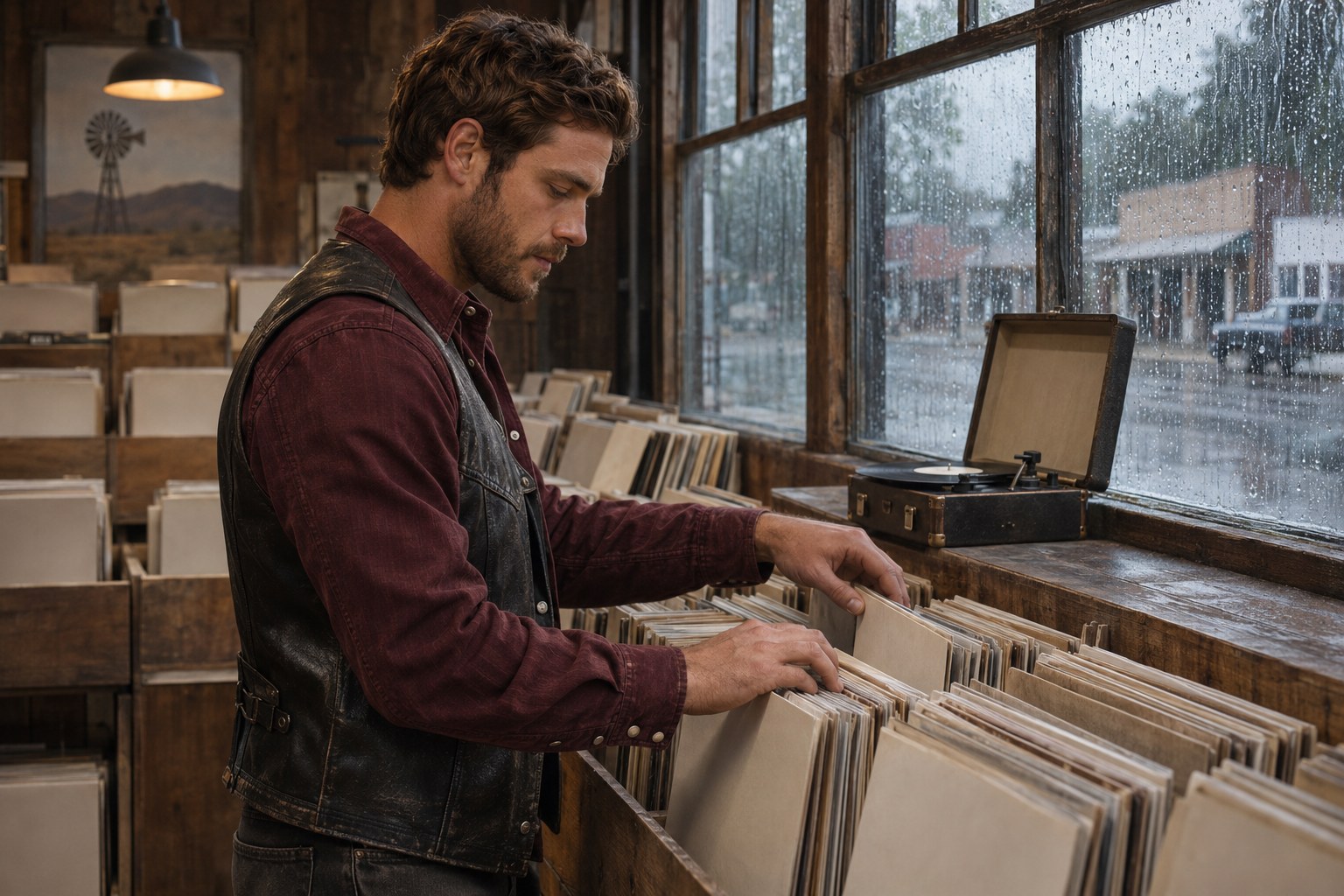
Songs like Waylon Jennings pair a low, unhurried baritone with a band that hits harder than country was supposed to in the 1970s. The appeal is control: a singer who sounds relaxed while the rhythm section pushes. Billy Joe Shaver's "Georgia on a Fast Train," Merle Haggard's "Workin' Man Blues" and Steve Earle's "Guitar Town" share that swagger and that drive.
Waylon Jennings, born in Littlefield, Texas, in 1937, played bass for Buddy Holly before he became a country star. His outlaw run covers Lonesome, On'ry and Mean (1973), Honky Tonk Heroes (1973), Dreaming My Dreams (1975) and Ol' Waylon (1977). The 1976 outlaws compilation he shared with Willie Nelson, Jessi Colter and Tompall Glaser became the first country album certified platinum.
What does Waylon Jennings sound like?
Waylon Jennings records are built from the bottom up. Bass and drums lock into a heavy, almost rock thump, and a phase-shifted Telecaster stabs around them where 1960s Nashville would have put strings and backing singers. Honky Tonk Heroes captures the change at its clearest: a touring band's looseness, with Shaver's songs in place of polished Music Row material.
The Waylon Jennings voice sits low and dry, closer to talking than crooning, with a slight lag behind the beat. He sang about the road, stubbornness, women he'd let down and the cost of doing things his own way, and he could turn that skepticism on himself. "Are You Sure Hank Done It This Way" (1975) questions the whole star system, and "Don't You Think This Outlaw Bit's Done Got Out of Hand" (1978) questions his own legend.
Songs like Waylon Jennings: 10 picks
- Billy Joe Shaver, "Georgia on a Fast Train" (1973). The writer behind nearly all of Honky Tonk Heroes sings his own proud, funny self-portrait, and the plain Texas phrasing shows where that record got its attitude.
- Merle Haggard, "Workin' Man Blues" (1969). A snapping Telecaster and a tight shuffle from Bakersfield, the West Coast alternative to Nashville polish. It has the same blue-collar pride with no apology attached.
- Willie Nelson, "Shotgun Willie" (1973). Half-spoken and loose, with a band that sounds like it's enjoying itself. It's the sound of Waylon's closest ally walking away from the Nashville formula in the same year as Honky Tonk Heroes.
- David Allan Coe, "You Never Even Called Me by My Name" (1975). Written by Steve Goodman with John Prine, it's a send-up of country cliches that name-checks Waylon himself. The joke works because the band plays it completely straight.
- Steve Earle, "Guitar Town" (1986). The title track of Earle's debut brought the twang and the road-weary brag into the 1980s. The guitar line and the forward lean owe a clear debt to Waylon's Telecaster records.
- Shooter Jennings, "4th of July" (2005). Waylon's son leans further into Southern rock on this road song from Put the O Back in Country. The vocal grain is a family trait, and the rhythm section is even louder.
- Eric Church, "Lotta Boot Left to Fill" (2006). A jab at country singers who borrow the outlaw image, from Sinners Like Me. It's the modern answer to "Are You Sure Hank Done It This Way," aimed at the same target thirty years on.
- Jamey Johnson, "In Color" (2008). A slow, plainspoken baritone reading from That Lonesome Song, about a grandfather's old photographs. It's the closest modern match for the quiet side of Dreaming My Dreams.
- Sturgill Simpson, "You Can Have the Crown" (2013). A wry, broke-and-unbothered song from High Top Mountain, sung with a low drawl that often gets compared to Waylon's. It shares his habit of laughing at his own bad luck.
- Margo Price, "Hurtin' (On the Bottle)" (2016). A sharp honky-tonk number from Midwest Farmer's Daughter, with a dry-eyed delivery and a band that stays tight. It proves the outlaw posture doesn't need a baritone.
Waylon Jennings made rebellion sound easy: the band does the shoving, and the voice never raises itself to win the argument.
Jesse Cole Beckett songs that fit
Jesse Cole Beckett, a modern outlaw country baritone on McCandless Records from Hazard, Kentucky, shares Waylon's themes more than his phase-shifted guitar sound, and these three songs from The Last Porch Light (2026) line up best.
- Close match: Jesse Cole Beckett, "Good Trouble". The album's opener is a restless self-portrait built from small rebellions, like getting fired from the feed store for singing. The self-mythology is pure Waylon, though Beckett's palette of acoustic guitars and slide steel is warmer than his.
- Close match: Jesse Cole Beckett, "Diesel and Dust". Track five is a long-haul trucker's declaration of independence, turning down his father's factory line for a beat-up Peterbilt and owning what it costs him. The road and the stubbornness match, without the heavy thump of a Waylon rhythm section.
- Partial match: Jesse Cole Beckett, "Rattlesnake Smile". A story song about a charming small-town con man that flips into the narrator's own confession in the bridge. That turn recalls Waylon's skepticism about his own legend, but the third-person storytelling is closer to a Western ballad than a Waylon strut.
More artists like Waylon Jennings
Beyond the ten songs, the names most often grouped with Waylon Jennings include Johnny Cash, Kris Kristofferson, Jessi Colter, Tompall Glaser, Hank Williams Jr. and Johnny Paycheck from his own era. Newer listeners usually land on Whitey Morgan and the 78's, Cody Jinks, Chris Stapleton, Colter Wall and Ward Davis.
Pick by the Waylon you play most. If it's the thump of "Lonesome, On'ry and Mean," go to Shooter Jennings and Whitey Morgan. If it's the songwriting on Honky Tonk Heroes, try Shaver and Kristofferson. If it's the ache of "Dreaming My Dreams with You," Jamey Johnson and Colter Wall are the better fit.
Where to start
Start with "Georgia on a Fast Train" to hear the songwriter behind the sound, then "Workin' Man Blues" for the Telecaster template. Move to "Guitar Town" and "4th of July" to hear how that drive carried forward, and finish with "In Color" and Jesse Cole Beckett's "Good Trouble." Our outlaw country guide maps the wider history, and our songs like Sturgill Simpson picks go further into the modern revival.
Key takeaways
- Songs like Waylon Jennings pair a low, relaxed baritone with a heavy rhythm section and a stinging Telecaster.
- Billy Joe Shaver's "Georgia on a Fast Train" (1973) and Merle Haggard's "Workin' Man Blues" (1969) explain where the songwriting and the guitar sound connect.
- Steve Earle, Shooter Jennings, Jamey Johnson and Sturgill Simpson carry different parts of that sound forward.
- Jesse Cole Beckett's "Good Trouble" from The Last Porch Light (2026) is the closest roster match for Waylon's restless self-portraits.
Waylon Jennings won by refusing to hurry. The songs worth keeping next to his let the band push while the singer takes his time.
FAQ
What genre is Waylon Jennings?
Waylon Jennings is an outlaw country artist, one of the singers who defined that style in the 1970s. His records mix country songwriting with a heavier, rock-leaning rhythm section.
What artists are similar to Waylon Jennings?
Willie Nelson, Billy Joe Shaver, Merle Haggard, Johnny Cash, Kris Kristofferson and David Allan Coe are the closest from his era. Shooter Jennings, Jamey Johnson, Sturgill Simpson and Whitey Morgan carry the sound forward.
What Waylon Jennings song should I start with?
"Good Hearted Woman" and "Luckenbach, Texas (Back to the Basics of Love)" are the best-known entry points. For the full outlaw sound, play Honky Tonk Heroes (1973) from the start.
Who is Jesse Cole Beckett?
Jesse Cole Beckett is a McCandless Records act from Hazard, Kentucky, making modern outlaw country. The debut album, The Last Porch Light, came out in 2026.