
Hometown Lights by Nova Driftwood: a country baritone over house
Hometown Lights by Nova Driftwood asks a deep house producer to get out of a singer's way. Here's the mix problem at the heart of the Jesse Cole Beckett feature: a country baritone, a house low end, and the crossover records that solved it before.
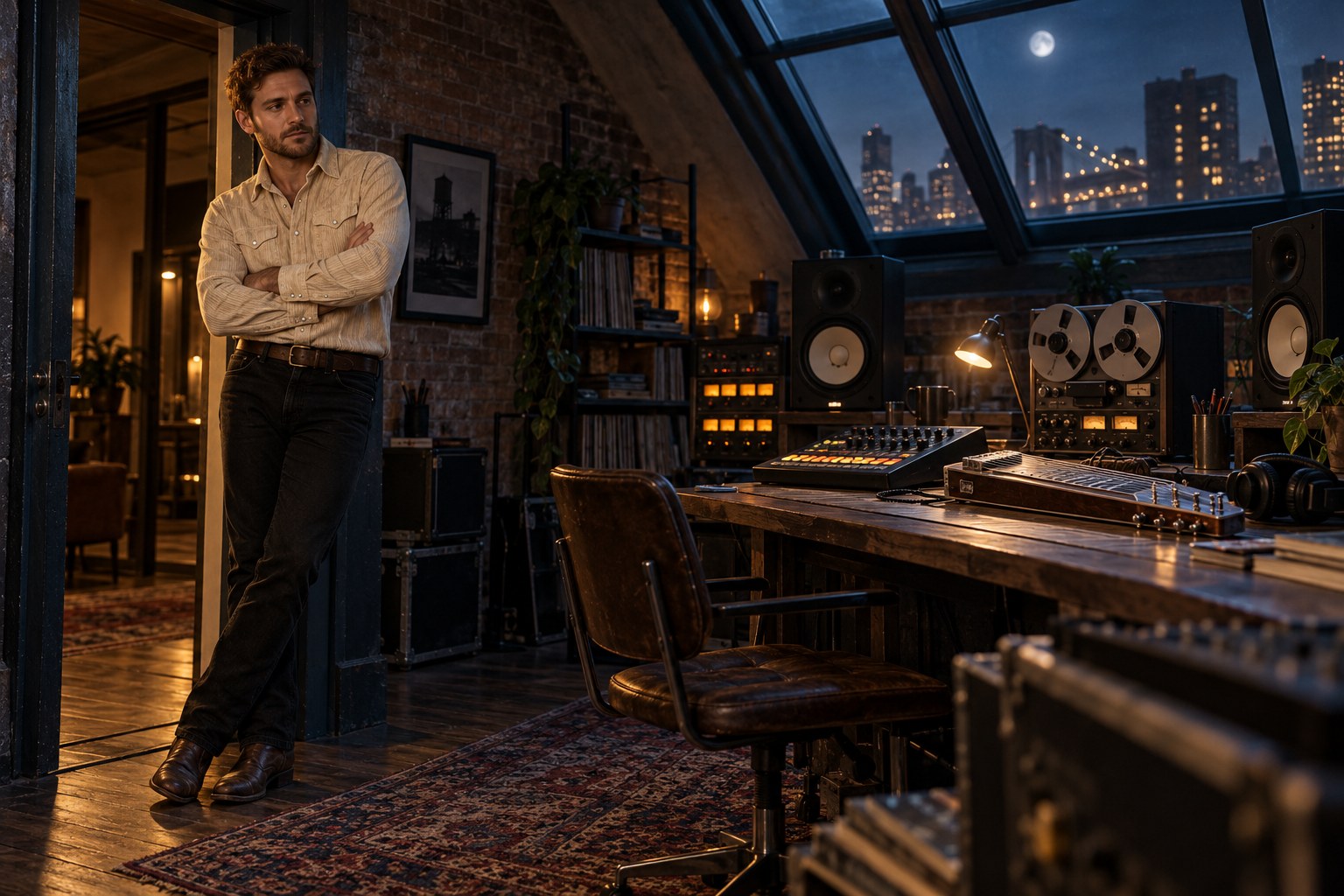
Hometown Lights by Nova Driftwood asks a deep house producer to do the one thing deep house rarely does: get out of a singer's way. The single, released May 25, 2026 with Jesse Cole Beckett as the featured voice, puts a country baritone from Hazard, KY on top of Nova Driftwood's house production, and the whole engineering problem of the record follows from that pairing.
Hometown Lights by Nova Driftwood featuring Jesse Cole Beckett is a 3:22 country-house crossover released on May 25, 2026, the second single in the Crosscurrents series and track 2 of the seven-track Crosscurrents, Vol. 1 (June 12, 2026). It joins a producer who treats vocals as texture with a singer whose records put the voice first, and its production question is which of those rules wins.
Nova Driftwood and Jesse Cole Beckett sit at opposite ends of the McCandless Records roster. Nova Driftwood is a Brooklyn, NY deep house producer whose debut, Tide Clock (April 26, 2026), works in the 118–128 BPM range with warm sub-bass, vinyl crackle and chopped vocals used as instruments rather than narrators. Jesse Cole Beckett's debut, The Last Porch Light (May 8, 2026), is sixteen tracks of acoustic guitar, slide steel, Telecaster, brushed drums and the occasional church piano.
Crosscurrents was built on the idea that one producer's house sound could sit under every other artist on the label, one genre per track. Hometown Lights is the session where the guest's genre has the strongest opinions about the mix. Country records are cut around the lead vocal. House records are cut around the kick. Those are two different centers of gravity.
The mix hierarchy in Hometown Lights by Nova Driftwood
Every mix has a hierarchy, and genre conventions mostly decide it before anyone touches a fader. In deep house, the kick and the sub-bass are the floor everything else stands on, and the voice is often a fragment that comes and goes. Nova Driftwood's Tide Clock works that way: vocals chopped into textures, the groove doing the talking. A featured singer on a Nova Driftwood track is already a departure from the producer's own method.
Country production runs the other way. On The Last Porch Light, Jesse Cole Beckett's baritone is the reason the band is there. Two Headstones and Sunday Morning Sober are the kind of songs where the lyric carries the record, and the arrangement around them is built to stay out of the voice's path. A country feature on a house track brings that expectation with it.
The baritone itself is the hardest part of the brief. A low male voice has most of its body in the same range as a house kick and a bass line, so the two compete for the same space. Dance producers usually solve that by thinning the voice out or pitching the hook up. A country baritone loses its character the moment you do either, which is why the convention is to clear room around it instead.
Country records are cut around the lead vocal and house records are cut around the kick, and Hometown Lights has to choose a center of gravity.
What country-house crossovers have already proven
Avicii mapped this ground in 2013. Wake Me Up, with Aloe Blacc on vocals, put a strummed acoustic guitar over a big-room house build, and Hey Brother, from the same album, True, carried Dan Tyminski's bluegrass tenor onto a dance record. Both treated the acoustic instruments and the singer as the hook and the drums as the engine underneath, rather than the other way round.
Country's own producers have come at it from their side. Kacey Musgraves' Golden Hour (2018), produced with Daniel Tashian and Ian Fitchuk, ran High Horse on a disco pulse without dropping its country phrasing. Zedd, Maren Morris and Grey's The Middle (2018) put a country singer's voice in front of a full electronic production without processing it into a texture. Diplo's Heartless (2019) with Morgan Wallen pushed further toward pop.
The lesson those records share is about priority, not instrumentation. The crossovers that hold up keep the singer intact and let the electronic production carry momentum underneath. The ones that age badly chop the country voice into a sample and call it a collaboration. A deep house producer whose usual habit is exactly that chop has the more interesting decision to make.
Two palettes in one session
Jesse Cole Beckett's palette on The Last Porch Light is acoustic and played: acoustic guitar, slide steel, Telecaster, brushed drums, piano. Those are instruments that drift slightly against a grid, the way a steel phrase glides into a note instead of starting on it. Nova Driftwood's palette on Tide Clock is warm, repetitive and patient, with sub-bass and crackle that reward long listening rather than a big chorus moment.
The meeting point is warmth. Both artists' catalogs avoid bright, aggressive sound. Tide Clock leans on warm low end and vinyl texture, and The Last Porch Light leans on wood, steel strings and a baritone with what the label's own bio calls a soulful weather to it. Hometown Lights by Nova Driftwood starts from that shared temperature, which is why the pairing reads as a collaboration and not a remix.
The production conventions both sides inherit point to the same arrangement logic. Dave Cobb's work on Chris Stapleton's Traveller (2015) and Jason Isbell's Southeastern (2013) set the modern standard for giving a country voice room and letting the band step back around it. House music's equivalent discipline is restraint: fewer elements, more space, a groove that doesn't need to shout.
How to listen to Hometown Lights
The best way into Hometown Lights is through both home records first. Play Good Trouble and Saturday Night Salvation from The Last Porch Light to hear Jesse Cole Beckett's voice in its own setting, then a stretch of Tide Clock to hear how Nova Driftwood builds a groove. Then play Hometown Lights and listen for which artist's rules decide where the voice sits.
After that, play the full Crosscurrents, Vol. 1 in order. Hometown Lights sits at track 2, right after Verano with Santiago Fuego, and the run of seven tracks shows the same house producer adjusting to a different genre's mix priorities each time. The country track is where those priorities pull hardest against the house template.
Key takeaways
- Hometown Lights by Nova Driftwood featuring Jesse Cole Beckett was released May 25, 2026, runs 3:22, and is track 2 on Crosscurrents, Vol. 1.
- The record pairs a deep house producer who uses vocals as texture with a country baritone whose own album puts the voice first.
- A baritone shares its range with the kick and bass, so a country feature on a house track forces the mix to clear space around the voice.
- Avicii's Wake Me Up and Hey Brother (2013) and Zedd, Maren Morris and Grey's The Middle (2018) show that crossovers last when the singer stays intact.
- Warmth is the shared ground: Tide Clock's sub-bass and crackle and The Last Porch Light's acoustic, steel-string palette.
Most country-house crossovers ask country to shrink to fit the dance floor. Hometown Lights by Nova Driftwood is more interesting as the opposite test: whether a house producer known for chopping voices will let a Kentucky baritone stand whole in the middle of the mix.