
House for late-night drives: 12 tracks for the road home
House for late-night drives needs steady tempo, long energy waves and vocals that work like texture. Here are twelve tracks sequenced as a real drive home, from Mr. Fingers, Bicep and DJ Koze to three quiet cuts from Nova Driftwood's Tide Clock.
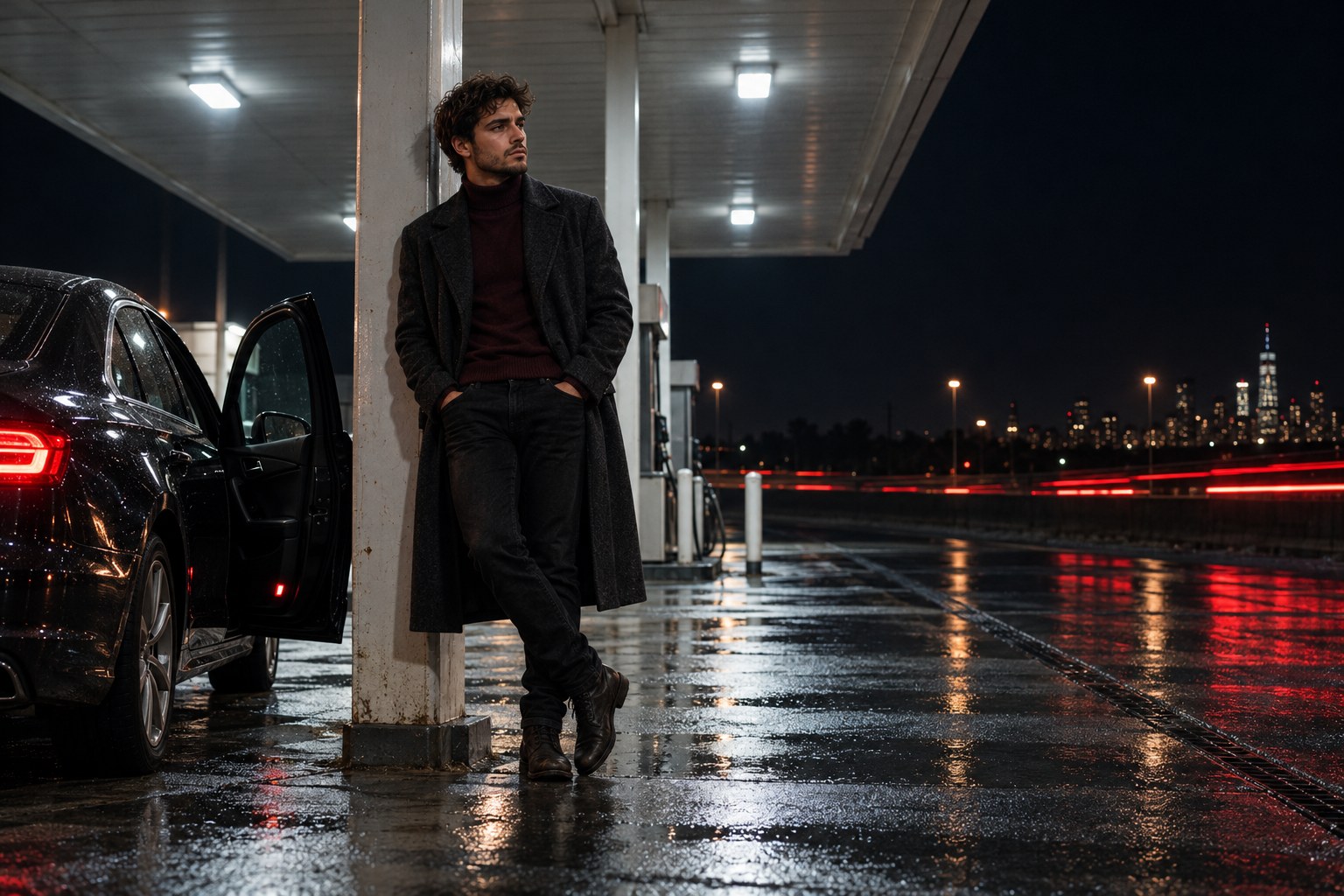
The best house for late-night drives isn't the music that pushes hardest; it's the music that never asks you to change gear. A good night-drive playlist runs on repetition, patient builds and vocals that sit inside the mix like road signs flashing past, and house music has been built that way since the mid-1980s.
House for late-night drives works when tempo holds steady, energy rises and falls in long waves instead of drops, and texture stays warm enough to fill a dark car. The twelve tracks below span four decades, from 1986's "Can You Feel It" by Mr. Fingers to 2018's "Pick Up" by DJ Koze, plus three cuts from Nova Driftwood's 2026 album Tide Clock placed where the drive turns quiet.
Driving at night strips listening down to its essentials. There's no visual noise, the road repeats, and the attention that would go to a dancefloor goes to the white lines instead. That's why deep house, with its four-on-the-floor pulse and loops that develop over minutes rather than seconds, fits the situation better than most genres built for the car stereo.
Nova Driftwood's Tide Clock, released April 26, 2026, was sequenced with exactly this kind of listening in mind: sixteen tracks running just over 64 minutes, organized around one long emotional arc with no acceleration. Three of its songs anchor the middle and end of the sequence below, next to records from Larry Heard, Peggy Gou, Bicep, Jon Hopkins and others.
What makes house for late-night drives work
Steady tempo is the first requirement. The night-drive mood breaks the moment a track lurches from a slow breakdown into a peak-time drop, so the picks here stay in deep and melodic house, where changes happen through filters and layering. Nova Driftwood's bio places the producer in the 118–128 BPM range, and the rest of the picks stay in that steady, mid-tempo pocket.
An energy arc is the second. A real night drive has a shape: leaving the lit streets, settling onto the highway, the long dark middle, and the slow return. The sequence follows that shape, peaking around tracks seven and eight with Bicep and Jon Hopkins, then thinning out toward stillness.
Vocals as texture is the third. Most of these records use a voice as one more instrument, a phrase repeated until it stops meaning words and starts meaning motion. Caribou's "Can't Do Without You" is the clearest case, and Nova Driftwood's "Harbor Light" takes the idea down to three lines.
On a night drive, the best house track is the one that lets the road do the storytelling.
The playlist: 12 house tracks for the drive home
- Mr. Fingers — "Can You Feel It" (1986): Larry Heard's chord pads and patient bassline are the right way to leave the city, calm and forward-moving from the first bar.
- Nova Driftwood — "Liquid Gold": a short lyric about music poured "slow into the night," which is exactly the moment the streetlights start to thin out.
- Peggy Gou — "Starry Night" (2019): bright, bouncing synth lines that keep the mood light while the highway opens up.
- DJ Koze — "Pick Up" (2018): a filtered disco loop from Knock Knock that rolls for minutes without hurrying, the ideal cruising-speed record.
- Caribou — "Can't Do Without You" (2014): one vocal phrase, repeated and swelled until it feels like the car itself is building speed.
- Four Tet — "Two Thousand and Seventeen" (2017): a gentle, melodic interlude from New Energy for the stretch where conversation in the car stops.
- Bicep — "Glue" (2017): broken beats and melancholy pads at the emotional peak of the drive, when the city is fully behind you.
- Jon Hopkins — "Open Eye Signal" (2013): the long dark middle, driving and hypnotic, from Immunity.
- Nova Driftwood — "Harbor Light": three lines addressed to a light at the water's edge, a plea to "hold me close" that works as a landmark to steer toward.
- Bonobo — "Kerala" (2017): a chopped vocal and restless rhythm from Migration that keeps the late hours moving without raising the volume.
- Nova Driftwood — "Undertow": the stillest point of the night, with its stuttered hook and the line "it's quiet in the deep."
- Frankie Knuckles with Jamie Principle — "Your Love" (1987): a Chicago classic for the final miles, warm enough to bring you back to your own street.
Why Nova Driftwood fits the late-night drive
"Liquid Gold" is the third track on Tide Clock and runs just under three minutes. Its lyric pictures sound spilling from the speakers onto the floor and asks for it to be poured slow, which makes it a natural second track in a drive that's still getting started.
"Harbor Light" sits at track eight, the midpoint of Tide Clock, and runs 4:22. Its three-line lyric is one of the smallest on the album, and placing it after Jon Hopkins gives the playlist a breath between the most propulsive records in the sequence.
"Undertow" is the second-to-last song on Tide Clock, where it takes the album's sea imagery to its lowest, stillest point. In the playlist it does the same job: the request to be "pulled under" turns into relief before Frankie Knuckles brings the lights back up.
The deeper lesson from Tide Clock is about sequencing. A night-drive playlist isn't a stack of favorites; it's a journey with a beginning, a long middle and an end, and the album models that from its sunrise opener "Golden Hour" to its closing title track.
Key takeaways
- House for late-night drives works best when tempo stays steady and changes come through filters and layers, not drops.
- Sequence the playlist like the drive itself: departure, cruising, a dark middle and a slow return.
- Vocals used as texture, like Caribou's "Can't Do Without You" or Nova Driftwood's "Harbor Light," keep attention on the road.
- Nova Driftwood's Tide Clock runs just over 64 minutes over sixteen tracks, close to the length of a long drive home.
How to listen
Play the twelve tracks in order with shuffle off, at a volume that sits just under conversation level. If the drive runs longer than the playlist, put on Tide Clock by Nova Driftwood from "Golden Hour" onward and let its sixteen tracks carry you the rest of the way home.