
The Last Porch Light album: why silence carries the songs
The Last Porch Light album makes restraint feel heavier than volume. Jesse Cole Beckett’s sixteen songs use brushed drums, acoustic guitars, slide steel, and a baritone that leaves air around each confession, turning the space between chapel and bar into the record’s most expressive instrument.
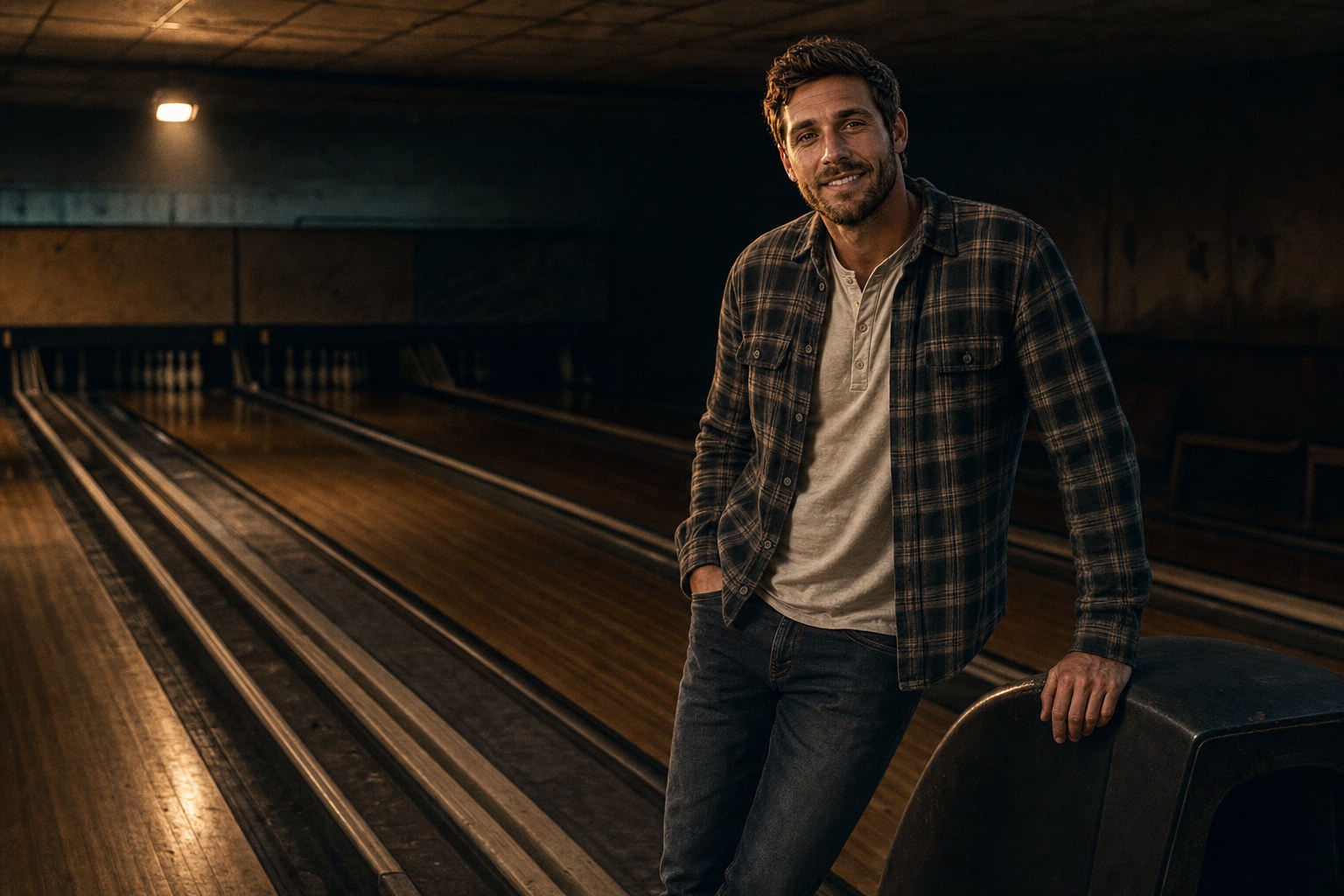
The Last Porch Light album treats quiet as a form of pressure. Jesse Cole Beckett doesn't need a wall of guitars to make regret feel physical; on "Two Headstones," the room around his warm baritone does as much dramatic work as the lyric. That restraint places the record closer to the plainspoken severity of Willie Nelson's Red Headed Stranger than to the arena-sized end of contemporary country rock.
The Last Porch Light is a sixteen-track album released on May 8, 2026, and its central sonic idea is controlled space: acoustic guitars establish the body, brushed drums keep the pulse human, and slide steel enters like a second thought rather than a permanent wash. Tracks such as "Saturday Night Salvation," "Hallelujah Anyway," and "Two Headstones" turn silence into narrative tension.
That approach gives Jesse Cole Beckett's modern outlaw country a different kind of weight. The songs visit saloon nights, sawmill roads, copper-still confessions, and Sunday-morning reckonings, but the arrangements avoid treating those settings as costume. A Telecaster's bite and an occasional church-piano lift appear as punctuation, not wallpaper.
The album's lead single, "Good Trouble," arrived on May 5, three days before the full-length. Heard beside the album's slower reckonings, it functions less like a mission statement than a doorway: the baritone is conversational, the country inflections are sustained, and the production leaves enough room for the moral complication in the title to remain unresolved.
The Last Porch Light album makes room sound like a lyric
Jesse Cole Beckett's baritone is the first source of that room. It doesn't sit above the arrangement as a polished lead; it settles into the acoustic guitar's grain, then roughens at the edge of a phrase. That movement from conversation to growl gives "Hallelujah Anyway" its tension. The vocal doesn't announce redemption as a finished state. It sounds like someone testing whether the word still fits.
The acoustic guitars provide the album's architecture because they carry rhythm without insisting on spectacle. In this setting, strumming isn't a neutral country signifier. It establishes the pace at which a thought can be spoken, allowing the brushed drums to feel like a body keeping time rather than a band marking a chorus. The effect recalls the unadorned focus of Jason Isbell's Southeastern from 2013.
Slide steel is used with similar discipline. Instead of filling every gap with a continuous cry, the instrument can answer the vocal after a line has landed. That makes the acoustic slide guitar feel conversational, almost skeptical. The technique connects Beckett to the older language of country soul, where a held note can carry grief without explaining it.
The production's respect for the song first becomes clearest when the arrangement refuses to overstate a turn. "Two Headstones" is built for emotional excess—the title alone suggests a whole family history—but the song's power comes from the distance between its image and the singer's measured delivery. A church-piano lift can widen that distance without resolving it, making the moment feel earned rather than engineered.
That is where Beckett separates his baritone country vocals from a generic low-register performance. Low voices are often recorded as authority, but Beckett uses the register as evidence of wear. The grain remains audible when the line opens, and the sustained country inflection sounds inherited rather than performed. Colter Wall's 2015 debut pursued a similarly weathered vocal surface, but Beckett's phrasing is more openly tender.
On The Last Porch Light, silence isn't the absence of country feeling; it's the place where the feeling becomes legible.
From Red Headed Stranger to modern outlaw country
Willie Nelson's Red Headed Stranger, released in 1975 on Columbia, remains a useful precedent because its sparseness makes every instrumental entrance carry moral consequence. Jesse Cole Beckett isn't recreating that record's austerity, but The Last Porch Light shares its belief that a song can become larger when the arrangement declines to interpret it for the listener.
Sturgill Simpson's Metamodern Sounds in Country Music from 2014 offers the opposite pressure point. That album made its studio artifice audible through psychedelic space, stacked textures, and deliberate departures from Nashville convention. Beckett's record keeps the contemporary edge but directs it inward. Its innovation is not a strange effect; it's the refusal to confuse density with emotional scale.
The distinction matters for modern outlaw country, a label that can flatten very different records into hats, distortion, and anti-polish. The Last Porch Light earns the term through its writing's moral geography: the bar, the chapel, the road, and the porch are states of conscience. Acoustic guitars and Telecaster bite locate the songs in country tradition, while the controlled dynamics keep them from becoming heritage exercises.
On "Saturday Night Salvation," the title's collision of release and ritual is carried by the arrangement's balance. Brushed drums suggest the late hour without turning the track into a bar-band stomp, while the vocal keeps one foot in confession and the other in performance. That friction is a defining feature of Americana songwriting: the narrator isn't outside the mythology, but he knows what the mythology costs.
The album's country soul emerges through phrasing more than ornament. Beckett lets a syllable hang, then pulls it back toward the beat, creating the sensation of a singer negotiating with his own admission. Chris Stapleton often uses the same basic principle at a larger volume, pushing a rasp through the center of a phrase. Beckett leaves the contradiction quieter, which makes it harder to dismiss.
The sixteen-track length also changes how the restraint registers. A six-song statement can make minimalism feel like a premise; The Last Porch Light has to sustain it across saloon nights and Sunday-morning reckonings. The recurring materials—acoustic guitar, slide steel, brushed drums, occasional piano—become a vocabulary. Their return feels less like repetition than the way memory returns to the same few objects.
How to hear the album's quiet force
- Start with "Good Trouble" to hear Beckett's conversational baritone and the album's refusal to make moral conflict sound tidy.
- Move to "Saturday Night Salvation" and listen for how brushed drums imply a room without turning the song into a conventional honky-tonk performance.
- Play "Hallelujah Anyway" for the contrast between church-piano lift and a vocal that still sounds uncertain about grace.
- Finish with "Two Headstones" and focus on the spaces after the vocal phrases, where slide steel and room sound carry the unresolved weight.
The sequencing makes those spaces cumulative. By the time "Two Headstones" arrives, the listener has heard enough acoustic grain, brushed pulse, and restrained steel to recognize the album's emotional grammar. The song doesn't need a larger climax because the record has trained the ear to hear pressure in a pause.
That training is the quiet achievement of The Last Porch Light album. Jesse Cole Beckett understands that a weathered baritone becomes more vulnerable when it isn't surrounded by proof of its own importance. The songs respect the chorus, but they also respect what happens just before it: the held breath, the unfinished confession, the porch light still burning after the road goes dark.