
The Last Porch Light: Five questions with Jesse Cole Beckett
The Last Porch Light arrives as a slow-burning testament: sixteen songs that trade polish for room sound and old-fashioned storytelling. Jesse Cole Beckett places the baritone up close and the slide steel just behind it, letting the chorus earn its space without theatrical production.
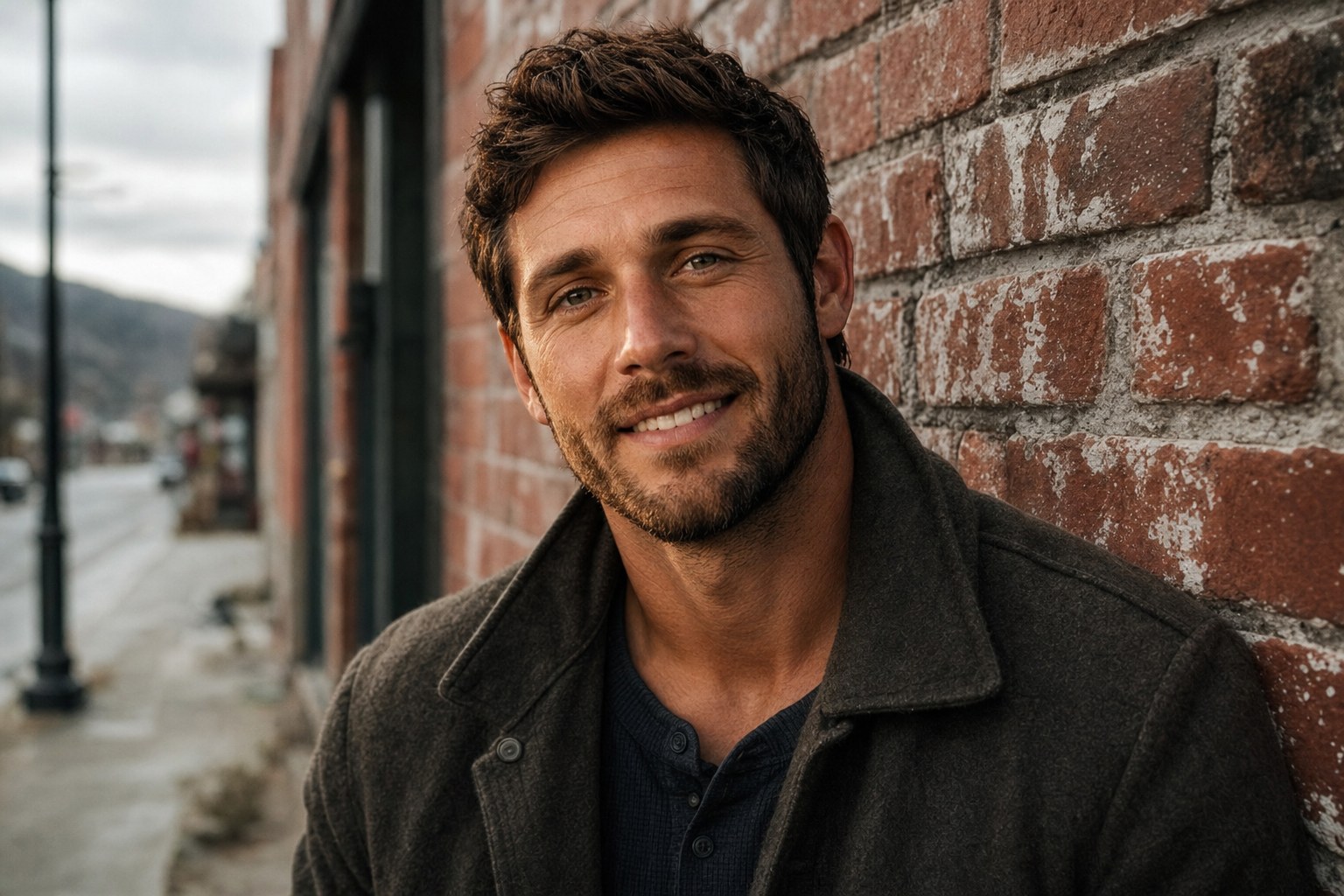
The Last Porch Light opens like a front door: it sits low in the mix, invites you in, and refuses to hurry. The record’s rituals—brushed drums, Telecaster bite, slide steel swells—announce a deliberate take on modern outlaw country.
Direct answer: The Last Porch Light is a sixteen-track debut released May 8, 2026, that frames Jesse Cole Beckett’s baritone and storytelling through spare arrangements and room-forward production; the record follows the May 5 single “Good Trouble” and trades quick hooks for scenes—saloon nights, sawmill roads—that unfold over the album’s runtime.
The Last Porch Light places Jesse Cole Beckett in a lineage that includes Sturgill Simpson and Tyler Childers while leaning on country-soul phrasing more than retro mimicry. Tracks like “Saturday Night Salvation” and “Two Headstones” set up a chapel-versus-bar dramaturgy, and “Hallelujah Anyway” lets a doubled vocal fold into a church-piano lift without losing grit.
The Last Porch Light — tone, arrangement, and lineage
The Last Porch Light’s arrangements are intentional: Jesse Cole Beckett keeps the acoustic guitar dry in the mix, reserves the Telecaster for punctuated counterlines, and places slide steel in the reverb tail so it answers rather than commands. That micro‑placement creates tension between immediacy and atmosphere on songs such as “Good Trouble.”
The Last Porch Light’s production favors close miking and small rooms. Jesse Cole Beckett’s voice sits within a small stereo image—breath in the left channel, midrange presence centered—while overhead room ambience gives cymbals and brushed drums a soft halo. The effect keeps choruses intimate rather than stadium-ready.
The Last Porch Light is about leaving space for the song to breathe—baritone up front, instruments that answer like old friends, and production that never shows off.
Five questions with Jesse Cole Beckett
Q1: On “Saturday Night Salvation,” you shift from conversational verse to a more sustained, almost gospel chorus—what guided the vocal phrasing and the decision to keep the instrumentation so restrained there?
Jesse Cole Beckett: I wrote “Saturday Night Salvation” with the chorus as a roof for the verses—the verses tell small, human things; the chorus opens the room. I kept instrumentation restrained—brushes instead of a full kit, a single Tele line doubled with fingerpicked acoustic—so the baritone could change color without being crowded. When the slide comes in on the second chorus it’s up the octave and smeared into plate reverb; that tiny lift makes the chorus feel like a doorway opening rather than a floodlight.
Q2: The Last Porch Light runs sixteen tracks—did you think about sequencing as a narrative, and how did you use keys, tempos or recurring motifs to move a listener through the record?
Jesse Cole Beckett: I thought of the sixteen tracks as a porch—different folks arrive, sit, pass through. I kept tempo variation subtle: mostly mid-tempo in the 70s–90s feel, with two slower, hymn-like moments to pause. Keys are arranged so that the Tele lines can sit comfortably in the same sonic pocket—many songs in open G and A—so transitions don’t jar. I also reused a melodic turn—a descending third—across three tracks to give the record a thread without making it feel like a motif museum.
Q3: Production notes say you ‘respect the song first.’ Practically, how did that translate to microphone choices, room sound, and any analog processing on the sessions?
Jesse Cole Beckett: Respecting the song meant small decisions: ribbon mics on the Telecaster for the bite, a Neumann U87 on acoustic with an SM57 off the bridge for body, and a pair of room condensers a few feet back for ambience. We leaned on valve preamps for warmth and kept compression gentle—mostly optical compressors on the vocal busses. Tape saturation was used sparingly on the master bus to glue the instruments but not to color the voice; if the lyric needed to land dry, we left it dry.
Q4: You released “Good Trouble” as the lead single on May 5—what about that track made it the right introductory statement for The Last Porch Light?
Jesse Cole Beckett: “Good Trouble” felt like the clearest crossroads of the record—it carries the Tele twang, the brushed-ride momentum, and the lyrical thrust between reckoning and stubborn hope. It’s approachable without being radio-glossed: the verse sits conversational, the pre-chorus tightens with a snare click, and the chorus breathes. We wanted a single that represents the record’s refusal to hide the room sound; that’s why it came out May 5, three days before the album.
Q5: You’re from Hazard, KY. How did that geography and its musical memory shape the songwriting and the record’s cultural stance among contemporaries like Sturgill or Colter Wall?
Jesse Cole Beckett: Hazard, KY taught me to listen to neighbors and seasons. The Last Porch Light borrows the honesty of the Kentucky storytelling tradition—I’m not chasing revivalism; I’m pulling from the phrasing and moral ambiguity I grew up around. Compared to Sturgill or Colter Wall, I’m trying to sit closer to the porch than the pulpit: baritone delivery, plain language, and music that lets a line land with little ornament. It’s a regional conscience, not a pose.
Key takeaways from The Last Porch Light
- The Last Porch Light is a sixteen-track debut (released May 8, 2026) that privileges room sound and vocal proximity.
- Jesse Cole Beckett uses Telecaster accents, slide steel reverb tails, and brushed drums to keep arrangements intimate.
- Sequencing and recurring melodic turns aim for narrative flow rather than single-driven hits; “Good Trouble” (May 5) serves as the album’s clear statement.
The Last Porch Light rests on economy: Jesse Cole Beckett builds scenes with a few well-placed colors—baritone, slide, Telecaster bite—so each chorus earns its light. The record asks you to stay for the whole porch, not just the front step.