
Modern outlaw country revival: Jesse Cole Beckett's The Last Porch Light
Modern outlaw country revival is a phrase that implies both stylistic return and selective revision, and Jesse Cole Beckett's The Last Porch Light stakes that claim plainly. The record's sixteen songs favor small-room arrangements—Telecaster bite, slide steel, brushed drums—and a weathered baritone that sits between the chapel and the bar.
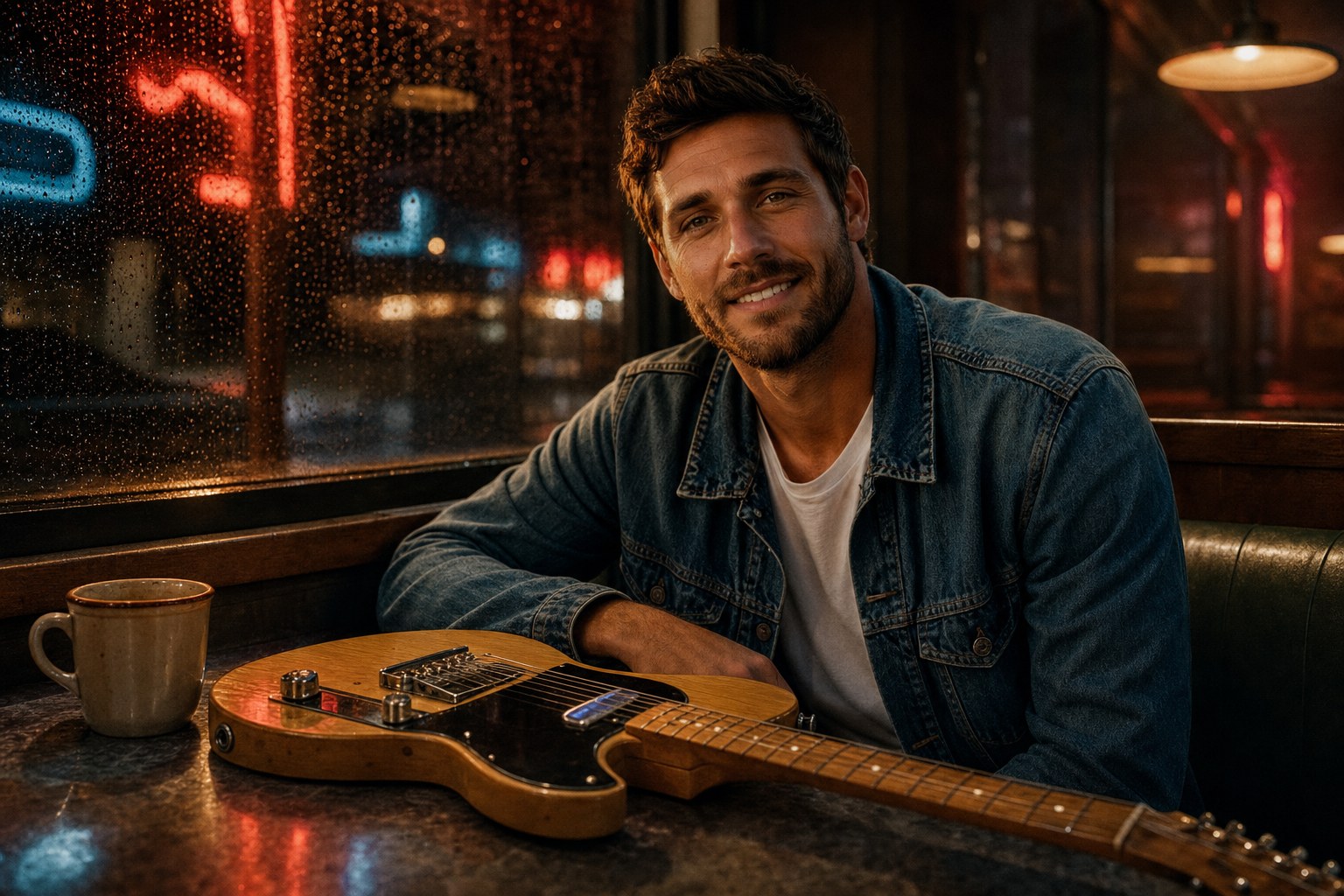
Modern outlaw country revival is not a nostalgia project on Jesse Cole Beckett's The Last Porch Light; it's a recalibration. Jesse Cole Beckett positions himself within the Sturgill Simpson/Tyler Childers/Colter Wall lineage but strips the gestures down to underpin a warm, conversational baritone and carefully chosen instruments—acoustic guitars, slide steel, a Telecaster with real edge.
Jesse Cole Beckett's The Last Porch Light anchors the modern outlaw country revival by insisting on song-first arrangements across sixteen tracks and a concise sonic palette. Released May 8, 2026, and preceded by the single "Good Trouble" on May 5, the album trades studio grandiosity for mid-tempo, Telecaster-led grooves, slide swells, brushed snare rooms, and occasional church-piano lifts that connect saloon-night confessionals to Sunday reckonings.
Jesse Cole Beckett builds The Last Porch Light out of archetypes—saloon nights, sawmill roads, copper-still confessions—but the record's production choices make those archetypes feel lived-in instead of illustrated. Songs like "Saturday Night Salvation" open with an unamplified acoustic and pick up a Telecaster counterline; "Hallelujah Anyway" introduces a church-piano patch to lift the chorus without swallowing the verse; "Two Headstones" closes on a slide-steel refrain that leaves room to breathe.
Jesse Cole Beckett's voice is the organizing instrument across The Last Porch Light. The baritone is warm rather than brazen: conversational phrases land on unadorned vowels, then the register opens into a sustained, slightly gritty sustain when the arrangement requires it. That balance—speech-level intimacy versus held, expressive notes—maps directly onto production choices that favor close-mic warmth and restrained room ambience.
modern outlaw country revival
Jesse Cole Beckett positions The Last Porch Light against the canon by choosing restraint where peers often choose spectacle. Jesse Cole Beckett references the broad arc of modern outlaw country—Sturgill Simpson's 2014 fuzzed Tele sections, Tyler Childers' 2017 Appalachian storytelling, Colter Wall's skeletal baritone minimalism from 2017—but arranges his sixteen tracks around small dynamic moves: Telecaster twang in the upper register, a slide steel placed as punctuation, brushed snare with a tight 60–80 ms room reverb.
Jesse Cole Beckett's single "Good Trouble" demonstrates how economy becomes atmosphere. Jesse Cole Beckett opens the track in a mid-tempo pocket (roughly 90–95 BPM), with a DI'd Telecaster doubled by a slightly overdriven amp mic, giving the attack a bite that sits ahead of the snare. The production uses a short plate on vocals for presence and a distant, low-level room mic on the drum kit to preserve intimacy while suggesting a barroom ceiling.
Jesse Cole Beckett's arrangements on The Last Porch Light avoid the modern reflex to saturate every chorus. Jesse Cole Beckett reserves the church-piano lift—on "Hallelujah Anyway"—for the second chorus only, so the listener interprets it as revelation rather than production padding. That decision aligns Beckett more with Jason Isbell's economy on 2013's Southeastern than with maximalist mainstream country choruses.
Jesse Cole Beckett trades production flash for a mise-en-scène: intimate mic choices, Telecaster edges, and slide steel that functions like punctuation rather than a chorus-level wash.
Where The Last Porch Light sits in the revival
Jesse Cole Beckett locates his narratives in the liminal spaces of country myth—the road, the porch, the chapel and the bar—and that placement matters to the revival's cultural contours. Jesse Cole Beckett's lyrics prefer specificity of setting over broad patriotic tropes: sawmill details, copper-still metaphors, and small-town reckonings make songs feel contemporary without resorting to trend-driven references.
Jesse Cole Beckett's instrumental palette reinforces those liminal narratives. Jesse Cole Beckett uses a Telecaster for rhythmic chime and occasional hard-edged lead fills, slide steel for mournful punctuation, and brushed drums to keep a heartbeat rather than a stadium pulse. Together these elements push the music toward a living-room confessional—an aesthetic choice that aligns the record with independent-minded Americana more than commercial country radio.
Jesse Cole Beckett's hometown, Coldwater, TN, matters as context because The Last Porch Light feels routed in a place where chapel and saloon coexist. Jesse Cole Beckett's record doesn't mythologize Coldwater; it uses that geography as an implicit reference point for characters who oscillate between grace and regret, which is the central moral texture of modern outlaw songwriting.
Three ways Beckett updates outlaw tradition
- Song-first sequencing: Jesse Cole Beckett structured The Last Porch Light's sixteen tracks so quieter narrative verses sit opposite slightly brighter choruses—"Saturday Night Salvation" opens the record in a spare key, while later tracks introduce piano or slide as a narrative payoff.
- Production restraint: Jesse Cole Beckett favors close vocal mics, tape-saturation on the Telecaster, and low-level room ambience rather than compressed, in-your-face mixes; the effect is warmth instead of polish.
- Lyrical specificity: Jesse Cole Beckett writes by anchoring scenes—sawmill roads, porch lights—that avoid generic outlaw posturing and instead render characters with detail, much like Tyler Childers' Purgatory-era storytelling (2017).
Jesse Cole Beckett's placement in the modern outlaw country revival is defined by small decisions that add up. Jesse Cole Beckett prefers the tension between conversational delivery and held, emotive notes; he keeps arrangements spare enough to let those moments land, and he sequences the album so that quiet reckonings accumulate into a larger moral arc across sixteen songs.
Jesse Cole Beckett's The Last Porch Light matters now because it demonstrates an alternative to two current tendencies: the synth-slick pop-country hybrid and the purely archival throwback. Jesse Cole Beckett offers a middle path—rooted songwriting, contemporary recording clarity, and arrangements that respect the chorus while leaving space for confession.
Jesse Cole Beckett's work on The Last Porch Light signals that the modern outlaw country revival isn't only about image or lineage; it's about craft choices at the level of mic placement, arrangement, and sequencing. Jesse Cole Beckett makes those choices deliberately, and they give his debut a clarity that will make it useful as a reference point for artists who want authenticity without mimicry.