
Tide Clock by Nova Driftwood: the vinyl crackle that keeps time
Tide Clock by Nova Driftwood treats vinyl crackle not as nostalgia but as a metronome. Nova Driftwood uses chopped vocal textures and warm sub-bass across a 16-track sequence to convert an album into a slow, mechanical tide that moves between sunrise and harbor-shelf analogism.
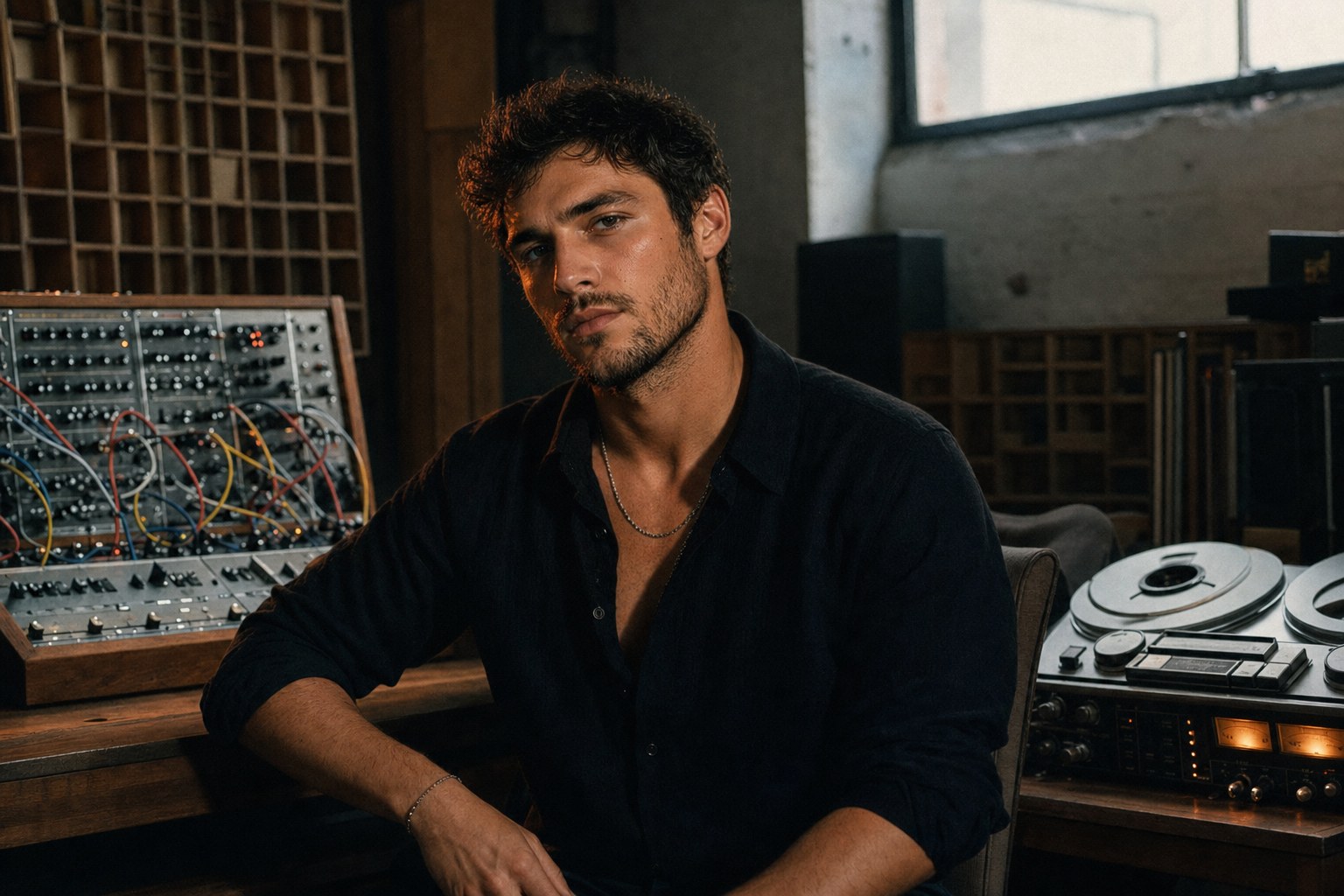
Tide Clock by Nova Driftwood arrives insisting that texture can be tempo. Tide Clock by Nova Driftwood places vinyl crackle at the center of rhythmic motion rather than at its margins, so the record's surface noise becomes a timing reference you feel as much as hear.
Tide Clock by Nova Driftwood is a sixteen-track record that uses 118–128 BPM house tempos, chopped vocal swells and deliberate sub-bass to map a twelve-hour emotional arc; the album released April 26, 2026, after the lead single "Golden Hour" on April 23, 2026. Listen closely and the crackle acts like a third instrument, nudging transient detail into the mix and anchoring sparse percussion.
Tide Clock by Nova Driftwood sequences its 16 tracks as a single-minded meditation on motion from "Golden Hour" to "Harbor Light." Nova Driftwood borrows the restraint of Solomun and Dixon and the textural patience of Palms Trax, but organizes those elements into an album-length timepiece rather than a DJ set—an approach that recalls Jon Hopkins' album Immunity (2013) in its commitment to long-form tension and release.
Tide Clock by Nova Driftwood — vinyl as metronome
Nova Driftwood builds the feeling of forward motion by foregrounding vinyl crackle in the high-mids and pairing it with a dry, punchy sub at 40–60 Hz. Nova Driftwood's mix places the crackle across the stereo image in a narrow mid-side band, so it reads like a rhythmic brush on every beat rather than a static layer.
Nova Driftwood uses chopped vocal textures as percussive devices more than lyrical carriers: the vocal chops on "Golden Hour" are gated to a 1/8-note rhythm with a 20–30 ms transient offset, which creates that propulsive off-grid feel while remaining locked to the 118–128 BPM pulse.
Nova Driftwood keys the drums and bass for breathing room: the kick sits at a tight 40 ms transient with medium-fast compression and 2–3 dB of sidechain gain reduction on the bass, allowing the vinyl crackle to punch through the loop without smothering low-end energy—this is how the record feels roomy at 3 AM and snug on headphones.
Nova Driftwood makes surface noise a timekeeper: the crackle isn't decoration, it's the record's internal clock.
Late-night house mechanics and emotional pacing
Nova Driftwood programs the album's arc so that the midsection trades explicit percussion for evolving textures; by track eight the kick pattern thins to every other bar while pads and reverbed vocal fragments carry momentum. Nova Driftwood uses reverb decays in the 1–1.6 second range to blur phrase boundaries, which gives the listener the sensation of time stretching without changing BPM.
Nova Driftwood contrasts analog warmth and minimalism by layering tape-saturated synths under sparse percussion on "Harbor Light," where a detuned saw pad at -6 dB sits beneath a round sub-bass sine at 45 Hz. Nova Driftwood's choices make the record function both as headphone meditation and as late-night house set material when the room finally locks in.
How to listen to Tide Clock by Nova Driftwood
- Play "Golden Hour" (single, April 23, 2026) on sunrise or in a still-car interior to hear the record's intentional 'dawn' timbre.
- Skip to "Harbor Light" to focus on the album's analog mystique—listen for the tape-saturated pad under a 45 Hz sub-bass.
- Listen to Tide Clock in sequence (all 16 tracks) to experience the twelve-hour one-way arc that Nova Driftwood structures without tempo shifts.
Tide Clock by Nova Driftwood makes a formal claim: albums can use surface detail as structural material. Nova Driftwood's vinyl crackle, chopped voices and measured sub-bass don't ornament a groove so much as define it, which reorients how you hear time in a house record—less a train and more a tide that rises and falls at a fixed BPM.