
Deep House 2026: Nova Driftwood and the Long-Form Club Record
Deep house 2026 has pivoted from peak-time weapons back to patient, album-length storytelling, and Nova Driftwood’s Tide Clock is the clearest statement of that shift. Tide Clock — a sixteen-track sequence released April 26, 2026 — insists on slow morphologies, warm sub-bass, and chopped vocal textures used as instruments.
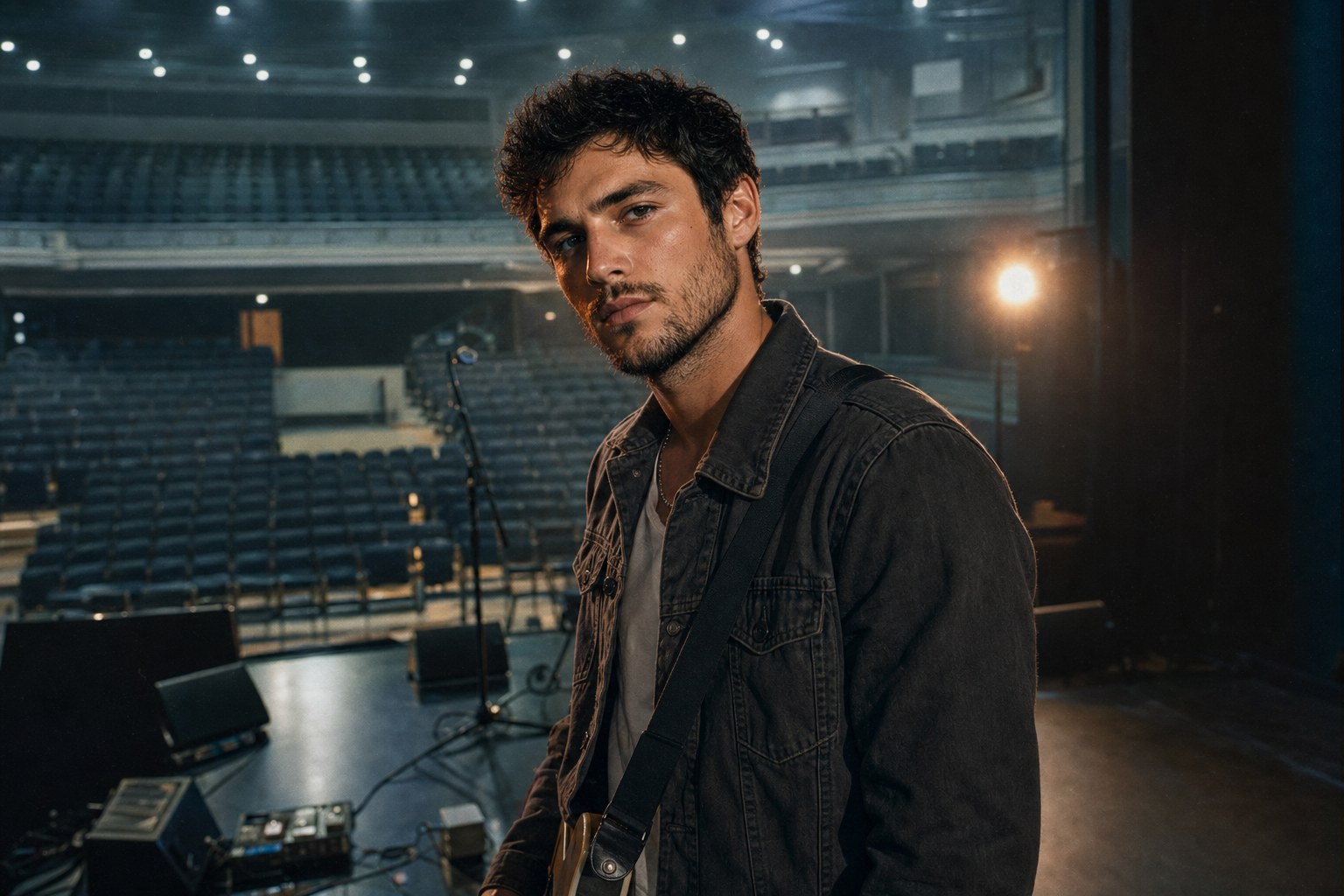
Deep house 2026 looks less like a DJ tool and more like a headphone narrative, and Nova Driftwood’s Tide Clock proves the point in practice.
Nova Driftwood's Tide Clock is a sixteen-track meditation released April 26, 2026, that stakes a claim for long-form listening in modern house: working in the 118–128 BPM band, the record arranges a single emotional arc across tracks such as "Golden Hour" (single, April 23, 2026) and "Harbor Light," favoring vinyl warmth, sub-bass focus, and chopped vocal textures as sonic objects rather than lyrical carriers.
Nova Driftwood's single "Golden Hour" arrived April 23, 2026, and the full Tide Clock followed three days later on April 26, 2026. The sequencing of Tide Clock maps twelve hours one way and twelve the other, a listening strategy meant for late-night drives, headphone immersion, and the post-peak club hour when a room finally locks in.
Deep house's origin moment sits in the mid-1980s but the lineage that matters for Nova Driftwood is the recent retreat toward texture and duration: artists like Solomun, Peggy Gou, Dixon, Palms Trax, and Jon Hopkins have made restraint a production decision — a low-frequency focus, long transitions, and space for micro-dynamics.
deep house 2026: origins, canons, and the present
Deep house 2026 traces back to the deep-pocket grooves of the 1980s, with Mr. Fingers' "Can You Feel It" (1986) as the canonical origin point for the genre’s sustained, emotive baselines and damped chord stabs. That record established house's interiority: bass that breathes and chords that decay rather than hammer.
Jon Hopkins' Immunity (2013) supplied a production vocabulary for widescreen electronic emotion: Hopkins layered saturated analog pads, high‑resolution transient shaping, and late‑verb tails to turn club tempos into headphone epics. Nova Driftwood borrows that insistence on room as instrument but keeps four-on-the-floor propulsion intact around 118–128 BPM.
Peggy Gou's breakout singles like "It Makes You Forget (Itgehane)" (2018) normalized the idea that house could be both melodic and minimal — hooks delivered through sparse, looped motifs — and Dixon's long-form mixing at Innervisions taught modern producers how to let grooves evolve over many minutes rather than hit hard and leave.
Nova Driftwood's immediate precedent is Palms Trax's late-2010s work: percussion-forward, warm-saturated low end, and vocal fragments treated as percussive elements. Tide Clock takes those tactics and expands them into album-scale dramaturgy.
Tide Clock isn't a collection of singles; it's a calibrated twelve‑hour arc rendered in house tempos — sub-bass, tape saturation, and vocal chops used as instruments.
How Nova Driftwood builds long-form house
Nova Driftwood constructs Tide Clock from production moves that reward patient listening: long pre-delay on plate reverbs, subtle mid-side EQ to keep kick and bass mono below ~120Hz, and tape-style saturation on buses to glue repeating motifs. Those choices make ten- to twelve-minute immersions feel coherent rather than indulgent.
Nova Driftwood treats chopped vocal textures as timbral modules: short vocal slices appear pitched, granularized, and filtered, then routed through slap-delay and band-limited modulation to function like shy synth stabs. On "Harbor Light," those chops form a recurring motif that doubles as both lead and rhythmic counterpoint without ever becoming lyrical exposition.
Nova Driftwood emphasizes sub-bass in the 40–70Hz band and keeps a flat transient on the 808-style kick to maintain dancefloor weight. Sidechain compression is light-handed — not the pumping used for peak club cuts but just enough to clear the low end and create a breathing sense of motion across long fades.
Nova Driftwood sequences Tide Clock with restraint: crossfades are often longer than eight bars, filter sweeps have gradual resonance changes, and percussive detail is revealed incrementally (a shaker here, a hi-hat modulation there). That sequencing reproduces the sensation of a DJ set that gradually changes energy without sudden jolts.
Where Tide Clock sits in the deep house 2026 ecosystem
Nova Driftwood occupies the intersection between the DJ-oriented, peak-time sensibility of Solomun and the home-listening architecture of Jon Hopkins. Tide Clock is playable in a late-night club, but its reward structure — long arcs and low dynamics — is designed first for headphones and midnight drives.
Nova Driftwood favors warm analog character: vinyl crackle is used as foreground rhythm on several tracks, not as nostalgic patina. That crackle sits in the 2–8 kHz band with a soft high‑shelf roll-off so it textures without harshness. Similarly, low-pass filter automation often centers around 1–1.5 kHz to keep midrange warmth while letting pads bloom.
Nova Driftwood's rhythmic palette flirts with progressive and tech house — rim clicks and offbeat hats suggest club compatibility — but the emotional pacing and the album arc align Tide Clock with the growing trend of house records meant to be consumed start-to-finish.
Essential records for understanding deep house 2026
- Mr. Fingers — "Can You Feel It" (1986) — origin point for sustained, emotive low end.
- Moodymann — Silentintroduction (1997) — Detroit-adjacent soul and lo-fi warmth.
- Jon Hopkins — Immunity (2013) — widescreen production techniques and headphone-first drama.
- Peggy Gou — "It Makes You Forget (Itgehane)" (2018) — melodic minimalism that crossed club and radio.
- Palms Trax — late-2010s singles/EPs — percussive warmth and vocal-sample as texture.
- Nova Driftwood — Tide Clock (2026) — sixteen-track long-form house narrative.
- Nova Driftwood — "Golden Hour" (single, 2026) — the record’s public hinge into playlists.
Nova Driftwood's Tide Clock reintroduces album thinking to deep house: each track functions as a scene in a larger sequence, and production choices — analog saturation, restrained sidechaining, granular vocal processing — reinforce that continuity.
Nova Driftwood's place in the lineage is clear: Tide Clock maps the introspective end of the house spectrum in 2026, where tempo bands remain dancefloor-ready (118–128 BPM) but the emphasis is on motion over climax. That motion is subtle: groove shifts happen via timbral rotation rather than volume spikes.
Nova Driftwood leaves a simple instruction for listeners and DJs: treat deep house now as architecture. Play Tide Clock start to finish and the record's curves reveal themselves; drop single tracks into a set and they hold their weight because they've been forged at the album level.