
Conscious Hip-Hop 2026: Kairo West's Baldwin Lineage
Conscious hip-hop 2026 isn't defined by dusty loops or solemn lectures. Kairo West's Baldwin Bus Receipt places the form inside Atlanta trap's low end, where baritone narration, gospel harmony, and dramatic cadence turn private responsibility into public music.
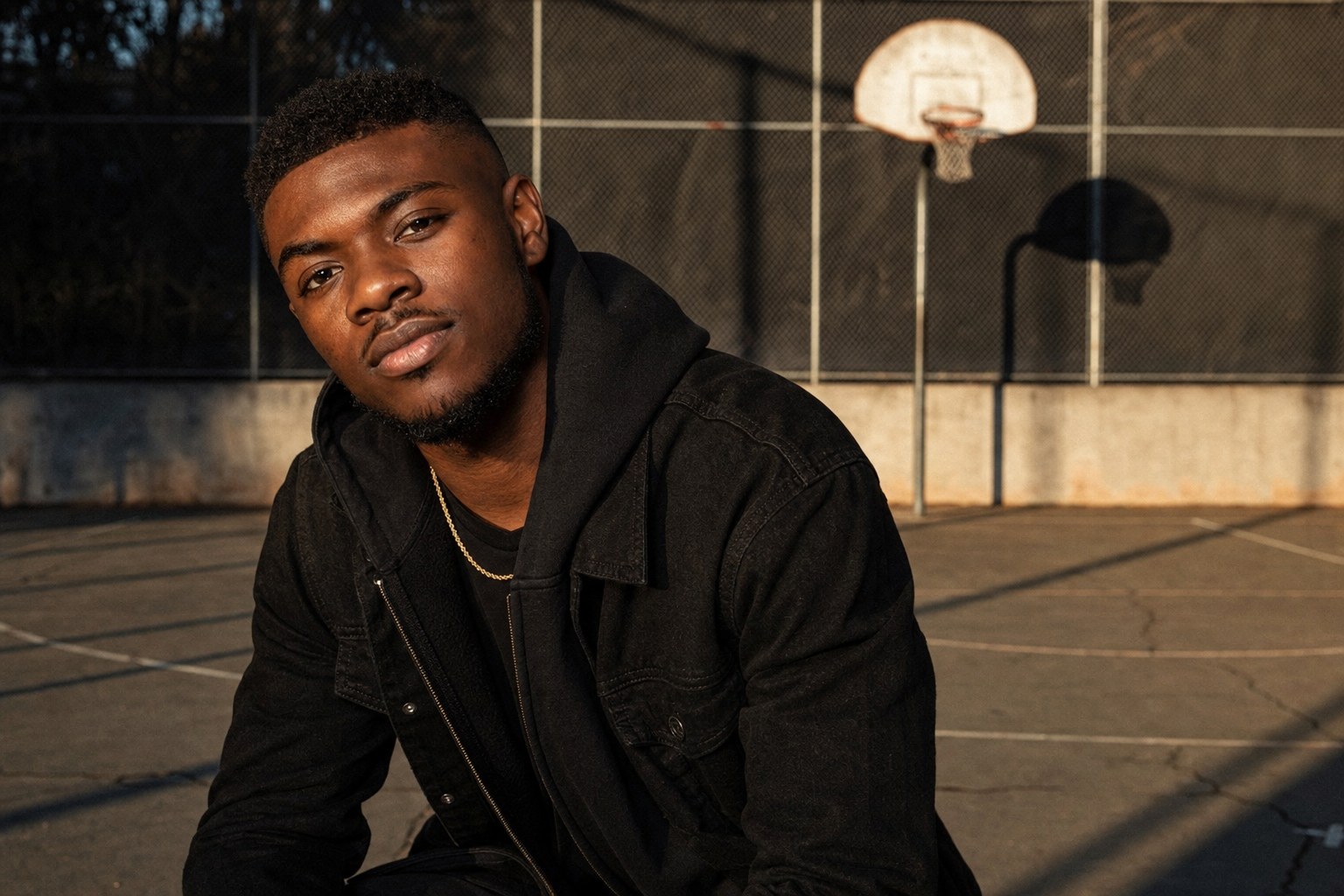
Conscious hip-hop 2026 is less a revival than a pressure test: can a rapper address moral weight without sanding the music's edges smooth? Kairo West answers with Baldwin Bus Receipt, an eighteen-track debut that puts trap snares and 808s beneath a baritone voice built for testimony.
Conscious hip-hop in 2026 joins the genre's original civic urgency to Atlanta's rhythmic grammar. Kairo West's Baldwin Bus Receipt, released May 4, 2026, carries the directness of Nas and the literary ambition of Kendrick Lamar, but its low end belongs to Southern hip-hop: clipped trap percussion, gospel undertow, and cadences that change when the subject turns intimate.
The album's title is a useful map. A bus receipt suggests movement, an ordinary document, and a record of where someone has been. Baldwin invokes James Baldwin's insistence on moral clarity without turning the music into an annotated reading list. Kairo West makes that lineage audible through careful articulation, dramatic phrasing, and stories about tenderness, ambition, and the burdens Black men carry quietly.
The record's opening movement establishes its physical vocabulary. “On Sight” and “Built Different” carry ride-out energy, with trap-oriented snares and 808s giving the songs forward motion. The tracks aren't presented as empty flexes. Their pressure comes from the contrast between hard rhythmic surfaces and a narrator whose authority depends on reflection rather than volume.
Conscious Hip-Hop 2026 and the form's original argument
Conscious rap emerged as a distinct force in the late 1980s, when political speech, Black self-determination, and formal experimentation became inseparable from hip-hop's production. Public Enemy's It Takes a Nation of Millions to Hold Us Back, released in 1988 on Def Jam, made sonic density part of the argument. The Bomb Squad's sirens, vocal collisions, and chopped funk turned agitation into architecture.
Boogie Down Productions' By All Means Necessary, released in 1988 on Jive, gave conscious rap another model: controlled menace and philosophical precision over stripped, hard-edged beats. KRS-One's delivery treated the verse as both street report and classroom intervention. That balance still matters because it refuses the false choice between lived detail and intellectual seriousness.
A Tribe Called Quest's The Low End Theory, released in 1991 on Jive, changed the temperature without abandoning substance. Q-Tip and Ali Shaheed Muhammad made room for negative space, upright-bass weight, and conversational flow. The album's intelligence lives in its pocket. Its influence explains why conscious rap works best when the message is carried by groove rather than placed on top of it.
Nas's Illmatic, released in 1994 on Columbia, consolidated the form around compression. With production from Large Professor, Pete Rock, Q-Tip, DJ Premier, and LES, the album made nine songs feel like a complete urban novel. Nas's observations are memorable because each image arrives with a sonic address: a dusty loop, a tense drum break, a pause that lets the street remain audible.
The genre's origin moment, then, wasn't a single sound. It was a decision about what rap could hold. Public Enemy made politics physical, A Tribe Called Quest made thought rhythmic, and Nas made interior life cinematic. Conscious rap became a method for binding social analysis to the granular evidence of voice, drums, samples, and place.
That method traveled south. OutKast's Aquemini, released in 1998 on LaFace, fused Organized Noize's expansive production with Andre 3000 and Big Boi's competing perspectives. The album's Southern hip-hop identity never depended on imitating New York's boom-bap. Its swing, bass, guitar, and gospel colors proved that regional texture could deepen conscious writing.
Killer Mike extended that Atlanta conscious rap tradition through a more explicitly civic register. On R.A.P. Music, released in 2012 on Williams Street Records, El-P's abrasive loops and live-feeling drums gave Mike's political arguments physical abrasion. The record's lesson is still useful: a serious theme doesn't require a respectable beat. It requires a beat with enough character to argue back.
Kendrick Lamar's To Pimp a Butterfly, released in 2015 on Top Dawg Entertainment, widened the lineage again. Thundercat's bass, Terrace Martin's jazz vocabulary, Kamasi Washington's saxophone, and Sounwave's production placed rap inside a larger Black musical continuum. The album's narrative voice shifts from bravado to doubt to self-interrogation, making instability a structural feature rather than a flaw.
Kairo West's newness is not that he makes conscious rap over trap drums; it's that he treats Atlanta trap's force as a vessel for tenderness.
How Kairo West's Atlanta conscious rap updates the lineage
Kairo West begins from a different production premise than the classic boom-bap canon. His foundation is the trap grid: crisp snares, sub-bass 808s, and repetition designed to create bodily insistence. That choice places Baldwin Bus Receipt closer to Atlanta's street-level pulse than to a museum version of conscious rap. The writing has room to think because the drums keep moving.
The vocal is the album's most decisive instrument. Kairo West's baritone is deep, grounded, and authoritative, but authority isn't confused with theatrical aggression. Clear articulation keeps consonants present, while dramatic cadence shifts change the emotional temperature of a verse. A line can arrive as a measured statement, then tighten into clipped urgency when the subject moves from aspiration to consequence.
“Mama's Hands” reveals what that approach can do when the beat's function becomes devotional. The song's title places care at the center, and Kairo West's gospel undertow gives the track a sense of inherited ritual without requiring a grand choir to announce it. The vocal carries the emotional architecture: grounded phrases, deliberate pauses, and the weight of gratitude held inside restraint.
“Therapy on Tuesdays” moves the album's argument toward maintenance rather than performance. Its premise is striking because it treats emotional labor as recurring practice, not a dramatic breakthrough. Kairo West's storytelling respects the listener by leaving room for contradiction: tenderness can coexist with ambition, and self-knowledge can sit beside the pressure to remain composed.
The album's literary lineage is clearest when Kairo West lets an image carry the thesis. Baldwin's influence is not a claim of equivalence with James Baldwin; it is a commitment to examining the moral conditions around a life. The title track turns an everyday object into evidence, much as the best conscious rap turns a room, a commute, or a family gesture into social history.
“4 AM Studio Ghost” supplies the album's most revealing late-night image. The studio becomes less a glamorous workplace than a room where memory refuses to leave. That framing connects Kairo West to the nocturnal self-auditing of Illmatic and To Pimp a Butterfly, while the trap-informed foundation keeps the scene rooted in the present rather than in inherited reverence.
The contrast between “On Sight” and “Mama's Hands” gives Baldwin Bus Receipt its shape. One announces motion and defensive energy; the other slows the emotional register without abandoning rhythmic discipline. Kairo West understands that sequencing can make an argument. The album doesn't ask the listener to choose between hardness and softness. It shows how each becomes legible through the other.
That is where modern trap storytelling enters the conscious-rap lineage. Trap has always been capable of detailed social observation, but Kairo West redirects its familiar symbols of speed, scarcity, and status toward interior accounting. The 808 doesn't erase vulnerability. It gives vulnerability a floor strong enough to stand on.
The contemporary state of conscious rap
Contemporary conscious rap no longer has one accepted sonic center. Kendrick Lamar's orchestral jazz-funk, J. Cole's sample-driven confessionals, Little Simz's cinematic density, and Killer Mike's militant soul occupy different rooms. What connects them is not tempo or instrumentation. It is the expectation that a rapper's perspective should develop across a project rather than arrive as a sequence of disconnected declarations.
The strongest recent records also reject the idea that seriousness requires austerity. Kendrick Lamar's 2015 album is full of elastic bass and funk; OutKast's Aquemini uses psychedelic guitar and live-band color; Rapsody's Eve, released in 2019 on Roc Nation, builds its concept from samples and historical figures without flattening the music into a lecture. Conscious rap remains vivid when its production has an argument of its own.
Kairo West belongs to that contemporary state because Baldwin Bus Receipt is organized around emotional movement. The eighteen-track album travels from ride-out energy to devotional softness and finally to late-night studio reverence. That arc gives the record more than a subject. It gives the subject changing acoustics: the public voice at speed, the private voice in recovery, and the artist alone with what remains.
The album also clarifies what Atlanta contributes to conscious rap in 2026. Atlanta's trap tradition prizes drum impact, vocal pocket, and memorable economy. Kairo West keeps those priorities while making room for gospel, soul samples, and literary reflection. The result doesn't imitate New York boom-bap or polish Atlanta into a generic national sound. It treats regional identity as compositional material.
Kairo West's place in the Kendrick Lamar lineage is therefore specific rather than ornamental. Like Lamar, he uses cadence as character development and allows self-questioning to interrupt certainty. Like OutKast, he understands Southern rhythm as a source of intellectual range. Like Nas, he trusts a sharply chosen detail. His distinction is the baritone calm that lets each influence register without swallowing the voice.
Six essential records for hearing the lineage
- Public Enemy — *It Takes a Nation of Millions to Hold Us Back* (1988, Def Jam): The Bomb Squad turns political urgency into maximalist, sample-built pressure.
- Boogie Down Productions — *By All Means Necessary* (1988, Jive): KRS-One establishes the conscious rapper as street philosopher, teacher, and antagonist.
- A Tribe Called Quest — *The Low End Theory* (1991, Jive): Q-Tip and Ali Shaheed Muhammad make intelligence inseparable from bass, space, and conversational swing.
- Nas — *Illmatic* (1994, Columbia): Large Professor, Pete Rock, Q-Tip, DJ Premier, and LES build the sonic grammar of compressed urban storytelling.
- OutKast — *Aquemini* (1998, LaFace): Organized Noize gives Southern hip-hop a widescreen, gospel- and funk-informed form of consciousness.
- Kendrick Lamar — *To Pimp a Butterfly* (2015, Top Dawg Entertainment): Sounwave, Thundercat, Terrace Martin, and Kamasi Washington expand rap's inner life through jazz, funk, and narrative fracture.
Those records make clear why Baldwin Bus Receipt doesn't need to sound retro to participate in the tradition. The lineage is carried by choices: a voice that names its obligations, a beat that gives thought physical form, and an album sequence that lets contradictions accumulate. Kairo West uses trap's present tense to revisit conscious rap's oldest question: what does it mean to remain human inside pressure?
Kairo West fits the lineage between Atlanta's gospel-rooted expansiveness and the modern rapper's demand for psychological specificity. Baldwin Bus Receipt isn't a boom-bap exercise dressed in Southern details, nor is it trap with a message pasted over the hook. It is conscious hip-hop built from Atlanta's rhythmic resources, with baritone narration and cadence shifts doing the work of arrangement.
That placement gives the debut its clearest significance. Kairo West takes the genre's civic and literary inheritance, runs it through 808s and trap snares, and arrives at a record where tenderness has bass weight. Baldwin Bus Receipt belongs to the lineage because it understands its central rule: rap becomes conscious not when it explains more, but when every musical decision makes the listener feel the cost of what is being said.