
Where Gasoline Hymn by Viper Junction Belongs on Screen
Viper Junction Gasoline Hymn lands where asphalt meets altar: the record's sixteen tracks turn highway grit into cinematic punctuation. The primary keyword maps naturally to late-night patrols, sunrise epilogues, and fist-pumping stadium montages — Gasoline Hymn's textures translate to picture with the same inevitable force as the lead single, Rattlesnake Kiss.
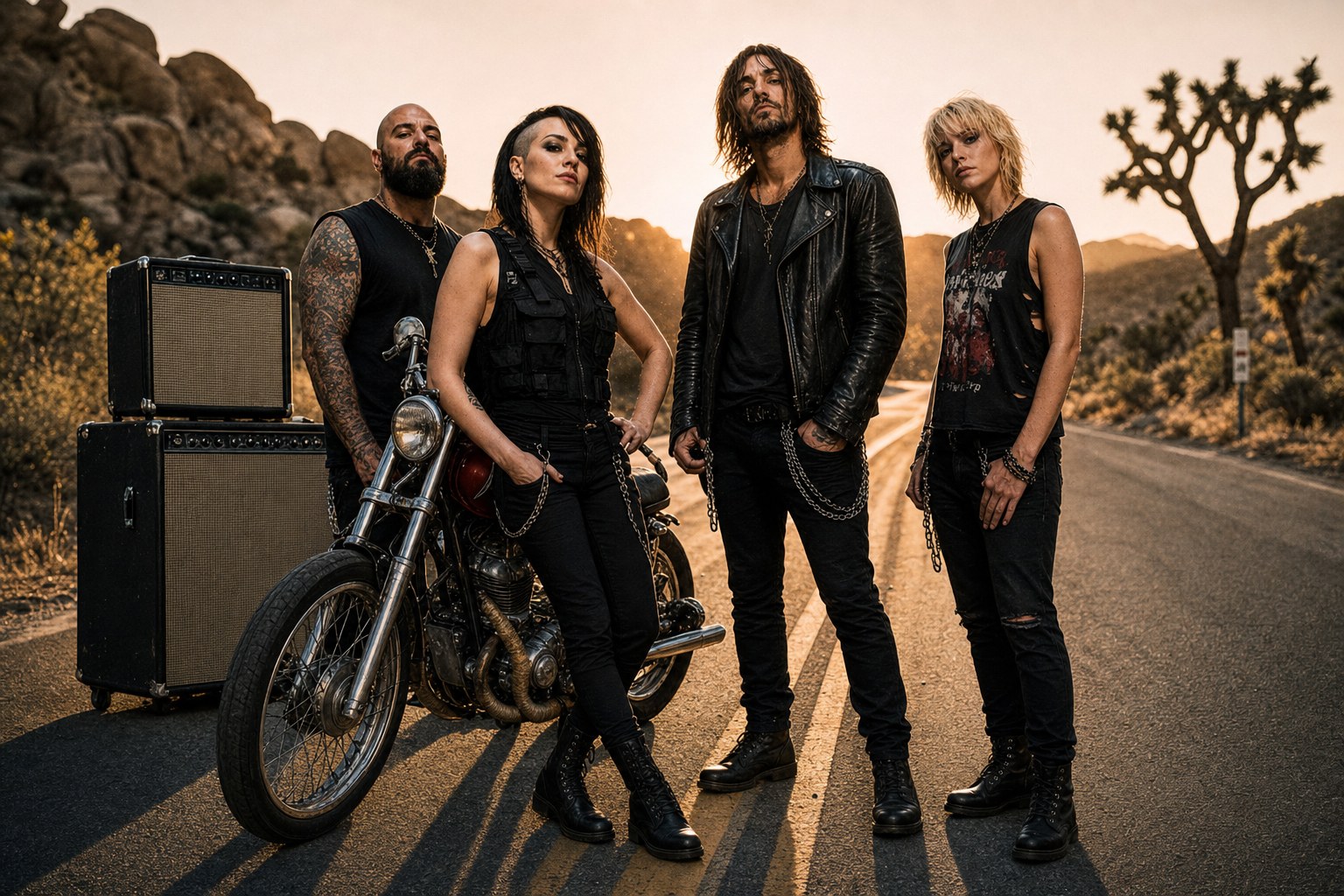
Viper Junction Gasoline Hymn is a soundtrack waiting for its cues: the album's sixteen tracks are written and recorded with theatrical contours that answer camera movement and scene dynamics. Rattlesnake Kiss, the lead single releasing May 14, 2026, announces the record's palette—raw alto, compressed guitars, and choruses built for wide frames.
Direct answer: Gasoline Hymn by Viper Junction belongs in three kinds of on-screen moments — a dawn I‑10 road montage (Rattlesnake Kiss), a crime-drama end‑credits that favors reverb‑heavy isolation (Gasoline Hymn, track 3), and a sports‑film rally or arena montage (Gasoline Hymn, track 11) — because the album pairs garage immediacy with stadium-scale choruses and a production language designed for cinematic dynamics (16 tracks; album out May 17, 2026).
Viper Junction's debut, Gasoline Hymn, was recorded as a desert document: the Joshua Tree provenance matters sonically. The record pushes an alto vocal into the foreground against thick, amp-driven guitar stacks and a drum sound that favors the snare's midrange snap over hi-hat shimmer—an aesthetic that reads onscreen as tactile and present, not background wallpaper.
Gasoline Hymn on the road: Rattlesnake Kiss for dawn and montage
Viper Junction's "Rattlesnake Kiss" drops like a headlight sweep; its mid‑tempo pulse (the record's opening stomp registers as a locked 116 BPM feel) and alto lead cut through a wall of overdriven Telecaster grit. Use it for a sunrise interstate montage—think a three‑minute driving cut across cracked asphalt where the camera alternates between wide landscapes and tight interior shots. The song's compressed vocal and guitar reverb create immediate forward motion while leaving room for cutaways to character detail.
Viper Junction's production choice—heavy amp saturation on the guitars with a bright, plate-style snare—makes "Rattlesnake Kiss" read like classic road cinema: the mix places the vocal at roughly 3–5 dB above the guitar wall in the verse, then vaults the chorus with gang‑vocal doubling and a roomier reverb tail, which cinema editors can ride to heighten arrival moments.
Gasoline Hymn sounds like a highway stitched to a chapel: the record's loud/quiet architecture maps perfectly to camera-driven emotional turns.
Gasoline Hymn in drama: track 3 for isolation and end‑credits
Viper Junction's Gasoline Hymn — track 3 — is pure desert intimacy: it opens on a dry, tremolo-picked guitar with spring‑reverb tails and an alto vocal treated with subtle tape saturation. Place it under the final montage or end credits of a noir-tinged crime drama where a protagonist walks away from a burned town; the song's sparse arrangement (verse stripped to guitar, vocal, light floor tom) preserves dialogue cadence while its slow‑bleed reverb carries the emotional residue into the audience's exit.
Viper Junction's mixing choices on track 3—minimal low-end, mid-centric vocal EQ around 1.2–2 kHz, and a short plate for the snare—allow picture editors to duck and swell the track dynamically. The song's intimacy is cinematic because it sounds like a room, not a record: close mic proximity on the voice and a deliberately dry drum bus make foreground emotions register onscreen.
Gasoline Hymn in the arena: track 11 for stadium and sports sequences
Viper Junction's Gasoline Hymn — track 11 — locks into a chorus designed for arena translation: a four‑on‑the‑floor drive, stacked vocal harmonies, and a doubled rhythm guitar that opens the mid frequencies. Use it for a sports movie's second‑half rally or a montage of a band returning to the stage—its arrangement includes call-and-response vocals and a gated reverb tail on the toms that editors can spike to synchronize with crowd reaction shots.
Viper Junction's stylistic move—placing the gang vocal an octave above the lead in the pre-chorus and then broadening it with stereo delays on the chorus—creates the necessary lift for an on-screen payoff. The song's chorus sits around a 2:1 loudness jump from verse to chorus, which sync engineers can exploit to punctuate cut-to-crowd moments.
Gasoline Hymn for epilogues: album closer (track 16) and reflective scenes
Viper Junction's album closer—Gasoline Hymn, track 16—reframes desert grandiosity as quiet reckoning: clean arpeggiated electric guitar, organ pad under the alto, and a vocal placed close with minimal doubling. Slot it under a sunrise epilogue or a coming‑of‑age show's closing scene where a character drives away; the track's slow fade and analog tape wobble make the final frame feel worn but sure.
Viper Junction's arrangement choices on the closer—lowpass on the guitar at 6 kHz during the outro, an organ riding at -8 dB under the vocal—produce a warm cinematic finish that doesn't compete with voiceover. It's the kind of mix supervisors file under "leave in—it's perfect for the last shot."
Key takeaways for supervisors and editors
- Rattlesnake Kiss (lead single) for road montages and high-energy driving scenes — 116 BPM stomp, compressed alto, wall-of-amp guitars.
- Gasoline Hymn, track 3, for isolated, dialogue‑forward endings — dry vocal, spring/tremolo guitar, minimal low end.
- Gasoline Hymn, track 11, for stadium/sports montages — gang vocals, gated toms, chorus-ready stereo delays.
- Gasoline Hymn, track 16 (album closer) for epilogues — arpeggiated clean guitar, organ pad, tape-saturation outro.
Viper Junction Gasoline Hymn translates to picture because its production language was built on dynamic contrast and physical sonics: stomp‑forward drums, amp-body guitar, and an alto voice miked close enough to breathe. Use the record where you need tactile momentum, emotional isolation, or a chorus that slams a scene into widescreen—and the desert will do the rest.