
Solstice Light by Lyra Voss: Where It Belongs on Screen
Solstice Light by Lyra Voss sounds less like a conventional debut than a ready-made language for images: electric pulse, midnight light, machine-prayer hush. Its strongest screen placements aren't obvious club scenes, but moments when private feeling has to become architecture.
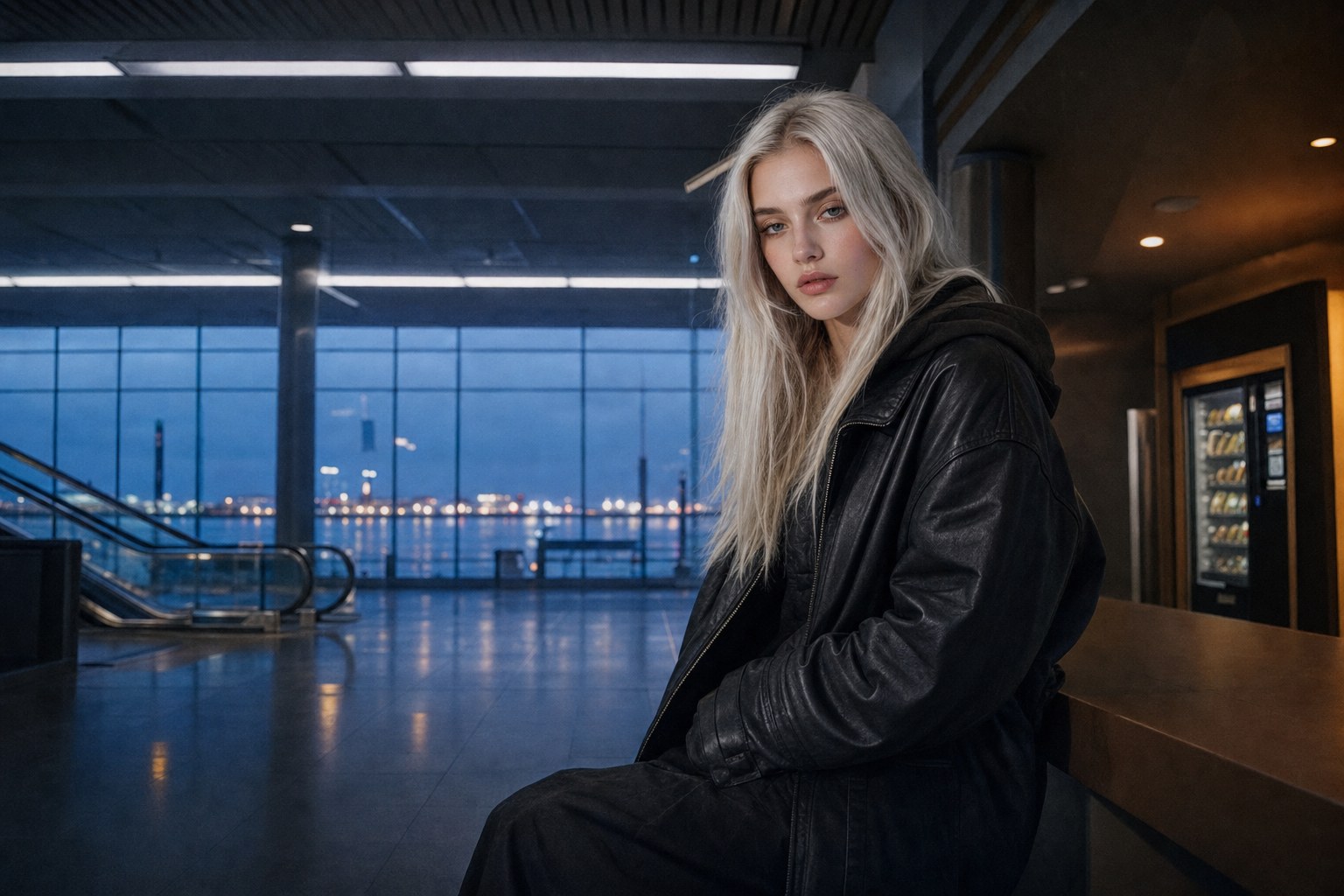
Solstice Light by Lyra Voss belongs on screen because its emotional scale is cinematic before it is theatrical. The sixteen-track debut doesn't simply supply a beat beneath an image; it turns the contrast between cold electronic surfaces and devotional feeling into a visual grammar.
Solstice Light by Lyra Voss fits three immediate placements: the opening credits of a near-future science-fiction film, the final drive of a nocturnal coming-of-age series, and the end credits of a film about grief that refuses catharsis. The lead single “Voltage,” released May 11, 2026, provides the clearest entry point, pairing an electric pulse with synth-pop architecture that can carry motion, scale, and unresolved feeling.
Lyra Voss's Reykjavík-based pop works through a tension familiar from the best screen music: the body moves while the mind remains suspended. The album's palette is built from lush electronic production, introspective lyricism, and euphoric synth-driven soundscapes. That combination places it near the emotional circuitry of M83's “Outro,” but with a more deliberate pop structure and a distinctly Nordic restraint.
The phrase “machine-prayer” describes Solstice Light more accurately than “dance record.” Its synths suggest circuitry, but its repeated movement toward release feels devotional. That makes the album useful to a picture editor working between spectacle and interiority, especially when a scene needs scale without surrendering its human subject.
Solstice Light by Lyra Voss as a science-fiction opening
Placement one is the opening-credit sequence of a near-future science-fiction film in the register of Denis Villeneuve's Arrival (2016): empty transit platforms, glacial water, a city waking beneath artificial light. “Voltage” should enter before the first establishing image, its electric pulse functioning as a structural grid while the title cards move through cyan and Nordic-gold darkness.
The rationale is simple: “Voltage” makes technology feel intimate. Rather than using the track as anonymous futuristic wallpaper, the sequence would cut from server rooms to a close-up of a face waiting for a train, allowing the song's introspective lyricism to humanize the machinery. Jóhann Jóhannsson's work on Arrival demonstrated how electronic restraint can make science fiction feel mournful; Lyra Voss brings that restraint into a more immediate pop form.
This is where the album's light-and-dark concept matters. Solstice Light is shaped by the longest day and the longest night, so a title sequence can treat brightness as pressure rather than comfort. The track's pulse should remain steady while the image moves from sterile geometry toward a single warm window, turning exposition into an emotional question.
The sync value of this placement rests in controlled momentum. “Voltage” has enough propulsion to move a sequence forward, but its cold surface leaves room for dialogue fragments, footsteps, and room tone. It is music for film that understands silence as part of the arrangement.
Lyra Voss writes the moment when a machine starts to feel like a witness.
A synth-pop soundtrack for the last drive home
Placement two is the final drive of a coming-of-age series in the emotional territory of HBO's Euphoria (2019), but without its maximalist panic. A character leaves a house party alone, passes sodium-lit storefronts, and watches dawn begin to dilute the windshield. “Voltage” belongs under that sequence because its euphoric pulse can register as both escape and self-deception.
The song's screen function would change through the edit. Early cuts would hold on the road and let the electronic rhythm provide forward motion; later cuts would linger on the driver's face as the vocal arrives, exposing the private lyric beneath the public momentum. That split between dancefloor propulsion and inward narration is the core of Lyra Voss's electropop sync appeal.
A supervisor might initially reach for Robyn's “Dancing on My Own,” released in 2010, for this kind of emotional contradiction. Lyra Voss offers a colder alternative. Where Robyn's classic turns heartbreak into communal release, “Voltage” frames release as a solitary ritual, with the electronic surface resembling headlights passing over a closed face.
The scene shouldn't resolve with a crash, a kiss, or a lyric timed to a revelation. The better ending is a red light, the character still sitting in the car after the track's strongest lift. Solstice Light understands that the most cinematic pop ending is sometimes a refusal to explain whether movement means healing.
Where Lyra Voss fits a grief film's end credits
Placement three is the end credits of an intimate grief film in the mode of Charlotte Wells's Aftersun (2022): not a funeral montage, but the quiet aftermath of a relationship whose meaning keeps changing. “Voltage” would begin over the final image rather than the emotional climax, letting its electric pulse carry the audience out of the story without pretending that grief has been solved.
That pairing works because Solstice Light is devotional without becoming solemn. The track's synth-driven lift would give the credits a physical rise, while the introspective lyricism keeps the emotional door open. The result would sit closer to the afterglow of M83's “Wait” than to a traditional piano ballad: electronic, spacious, and willing to let feeling remain partly unreadable.
For the mix, “Voltage” should arrive with the film's room sound still audible beneath it: a chair shifting, distant traffic, the low electrical hum of a kitchen. That transition preserves the song's relationship to real spaces. The music doesn't replace the world; it reveals the charged silence already inside it.
A fourth placement belongs to a prestige television episode's closing sequence after an apparent victory. The protagonist stands alone beneath an overlit supermarket sign while the city continues without them. Here, “Voltage” works as cinematic pop with a productive misread: the beat sounds triumphant at first, then the cool production exposes the cost of getting what the character wanted.
That scene gives the song a different dramatic job from the science-fiction opening or the last drive. In the opening, the pulse establishes a world; in the drive, it externalizes a feeling; after the false victory, it becomes evidence against the image. The same electric insistence acquires meaning through context, which is what makes a track durable in a screen library.
The screen language of Nordic synth-pop
Lyra Voss's Nordic synth-pop is especially suited to images that treat landscape as psychology. The album's northern-lights palette—ice-white minimalism cut with neon cyan and Nordic gold—suggests production design as much as color grading. A director can place the music against snow, glass, water, or fluorescent interiors without reducing it to an Iceland postcard.
The useful precedent is not simply Scandinavian atmosphere. Susanne Sundfør's Ten Love Songs, released in 2015 on Music for Dreams, showed how expansive electronic pop can hold grand arrangements and bruised interior writing at once. Solstice Light follows that principle through a cleaner machine-prayer aesthetic, making emotional distance part of the drama rather than a lack of warmth.
For a supervisor, the tradeoff is clear. “Voltage” supplies immediate movement and a recognizable pop center, but it doesn't dictate a scene's emotion as bluntly as a power ballad. Its electronic architecture leaves space for edits, dialogue, and visual ambiguity. The song asks the image to complete the feeling.
Three reasons Solstice Light works on screen
- “Voltage” carries kinetic energy without requiring a celebratory image, making it effective for departures, false victories, and unresolved endings.
- Solstice Light's contrast between introspective lyricism and euphoric synth production supports scenes that move physically while remaining emotionally private.
- The album's ice-white, cyan, and Nordic-gold palette gives editors a visual system for science fiction, nocturnal drama, and grief without relying on obvious spectacle.
- Its machine-prayer character leaves room for room tone, dialogue fragments, and silence, which makes the music more adaptable than a densely overproduced anthem.
Solstice Light by Lyra Voss belongs on screen wherever brightness carries a shadow: the train platform before the plot begins, the car that keeps moving after the party, the credits that roll before grief has found a name. “Voltage” is the album's clearest signal, but the larger achievement is architectural. Lyra Voss builds pop that doesn't decorate an image; it changes the temperature of the room around it.